



Description
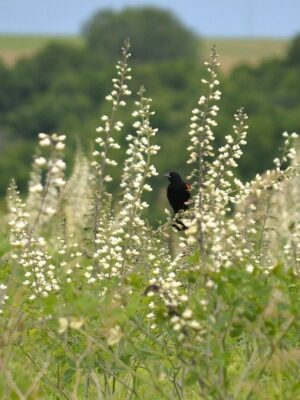
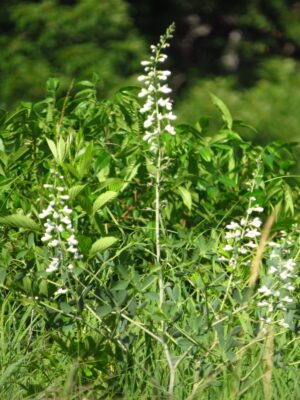
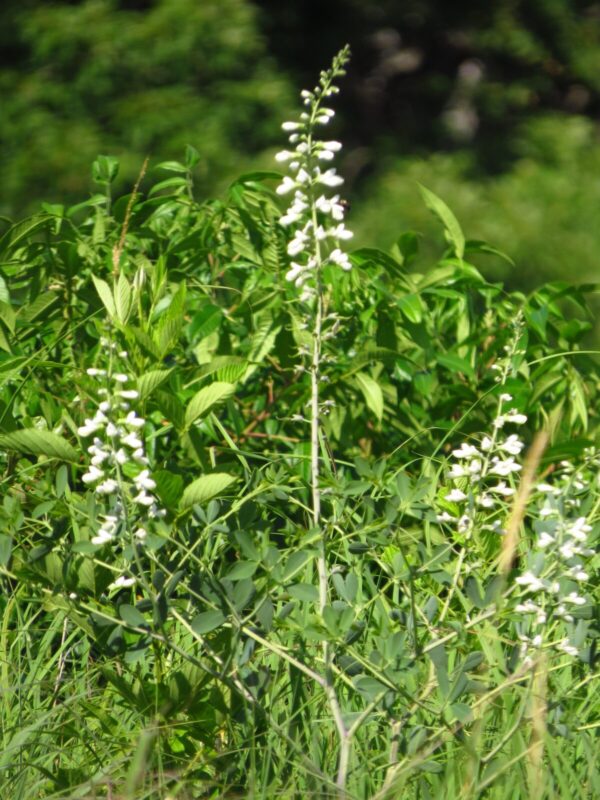
White Wild Indigo (Baptisia alba), also known as White False Indigo, is a long-lived native perennial known for its tall spikes of white, pea-like flowers that bloom in late spring. Its blue-green foliage and upright, shrub-like form add structure and interest throughout the growing season.
Growing up to 4 feet tall, White Wild Indigo thrives in full sun and adapts to a range of soil conditions from medium-wet to dry, sand, and clay. Its deep root system makes it drought tolerant once established and keeps maintenance low. Like other members of the pea family, it also fixes nitrogen in the soil.
The flowers attract bumblebees and other pollinators. The foliage supports butterfly and moth larvae, including Orange Sulphur, Clouded Sulphur, Eastern Tailed-Blue, and Southern Dogface. Deer generally avoid the plant.
After flowering, seed pods develop and persist into fall. The stems turn charcoal-black after the first frost, adding winter interest and helping disperse seeds.
White Wild Indigo is one of several Baptisia species that differ in flower color, size, and growth habit. Yellow Wild Indigo (Baptisia sphaerocarpa) produces bright yellow flowers and has a similar upright form. Small Yellow Wild Indigo (Baptisia tinctoria) stays smaller and suits drier sites. Cream Wild Indigo (Baptisia bracteata) grows lower and spreads outward, with cream-colored flowers appearing earlier in spring. Blue Wild Indigo (Baptisia australis) grows taller and produces blue to violet flowers.