Description
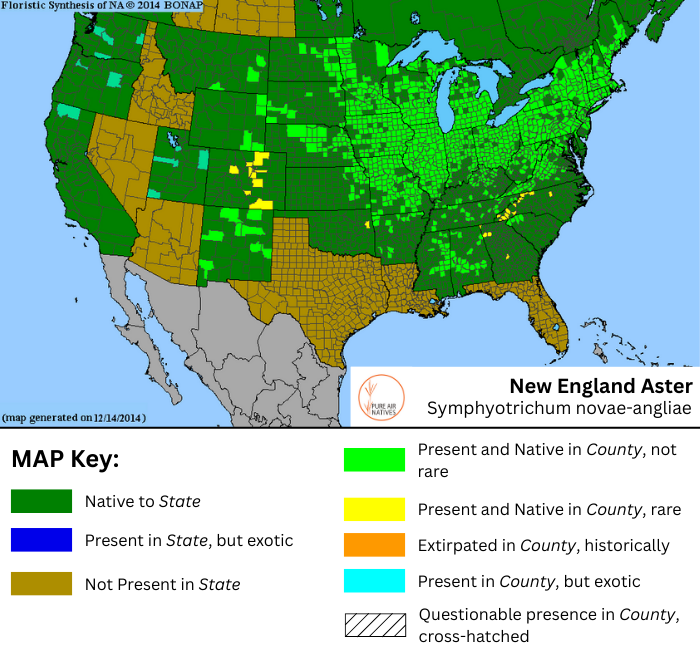
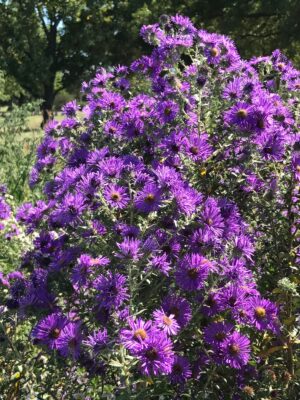
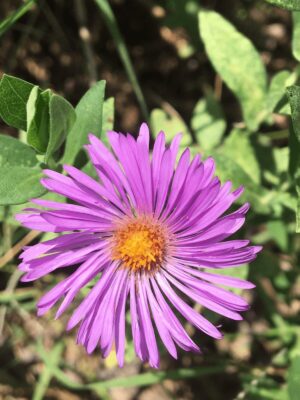
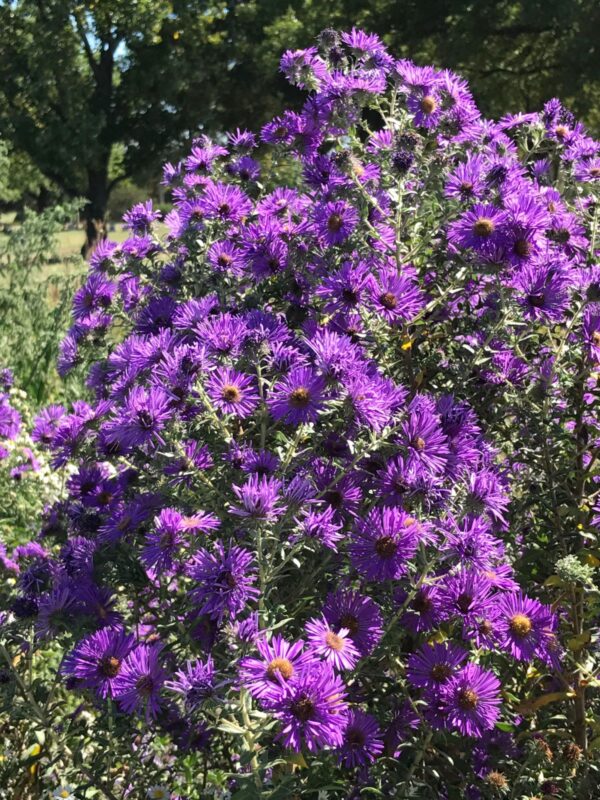
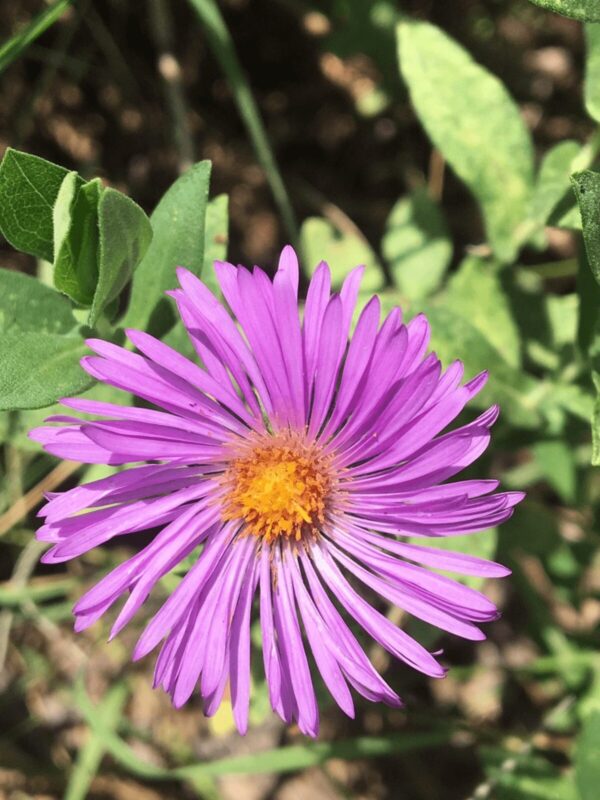
New England Aster (Symphyotrichum novae-angliae) is a bold, late-season native that brings rich purple color to the landscape when most plants are fading. Growing 3–6 feet tall, it blooms from late summer into fall with clusters of star-like flowers featuring purple petals and bright yellow centers.
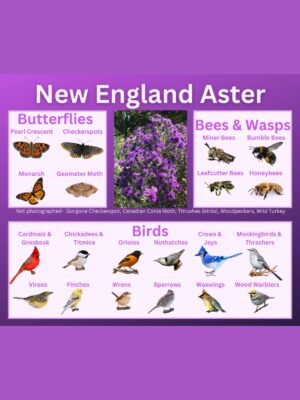
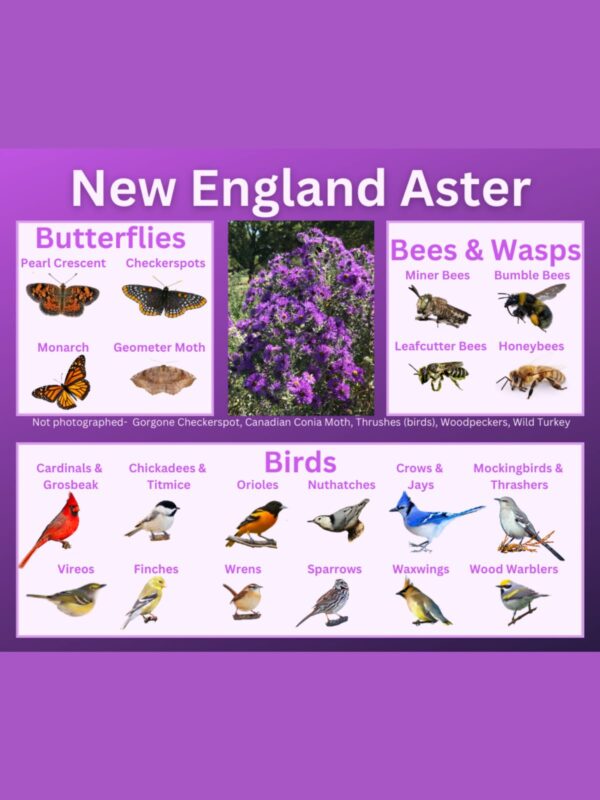
It’s a go-to plant for pollinators, especially late in the season when nectar is harder to find. Bees, butterflies, and Monarchs all rely on it during fall migration. Before it blooms, you can recognize it by its slightly hairy stems and leaves that wrap around the stem.
New England Aster grows best in full sun to light shade and prefers medium to moist, well-drained soils, but it’s adaptable to clay and even some sandy conditions. It can handle humidity, though good air circulation helps prevent mildew. It’s also fairly drought-tolerant once established.
Note that lower leaves often dry up by the time it blooms. That’s completely normal. If you want a shorter, bushier plant, you can cut it back earlier in the season. It self-seeds easily and can spread over time, so in smaller spaces you may want to remove seed heads. It’s not aggressive, but it can fill in.
New England Aster pairs perfectly with goldenrods like Showy Goldenrod (Solidago speciosa) or Stiff Goldenrod (Oligoneuron rigidum) for that classic purple-and-gold fall look. It also works well with grasses like Little Bluestem (Schizachyrium scoparium) and Switchgrass (Panicum virgatum).