Description
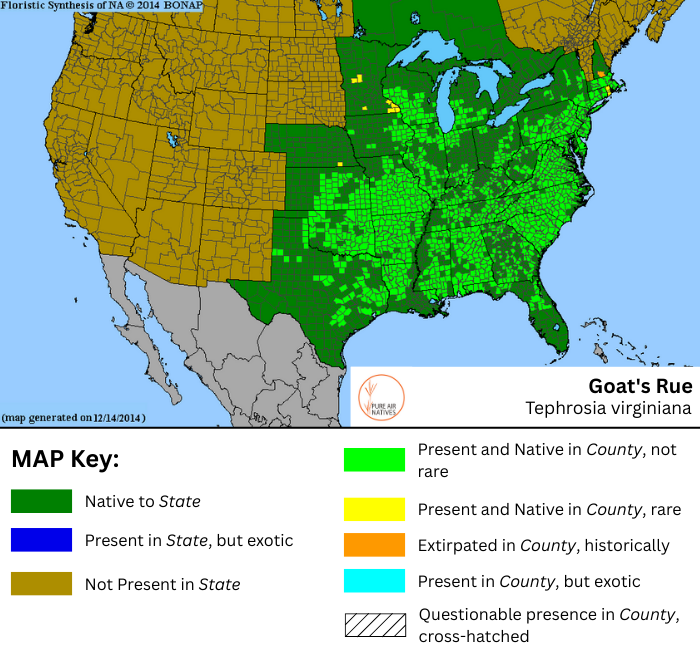
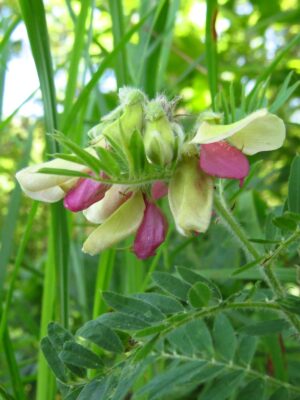
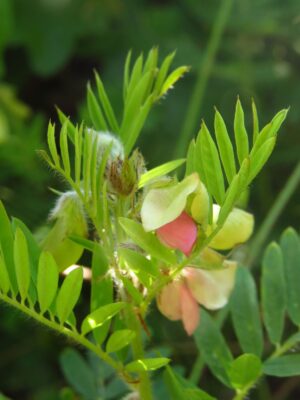
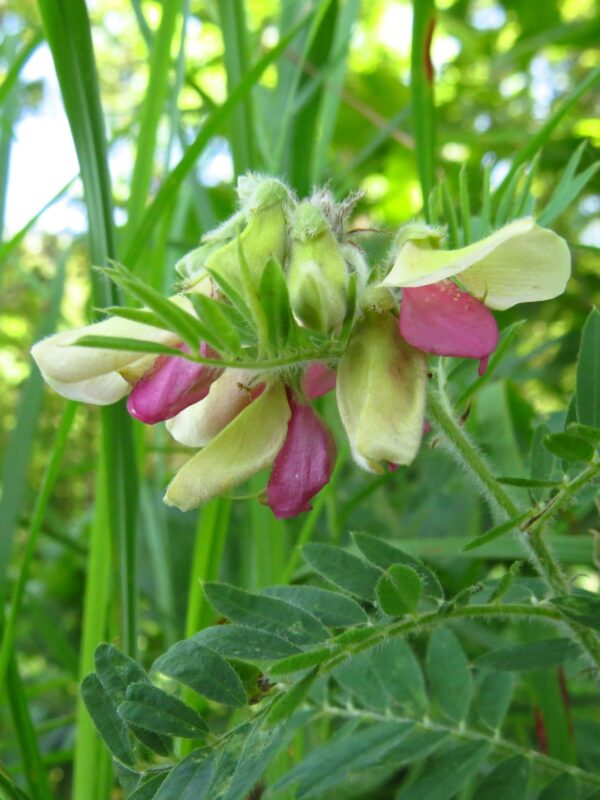
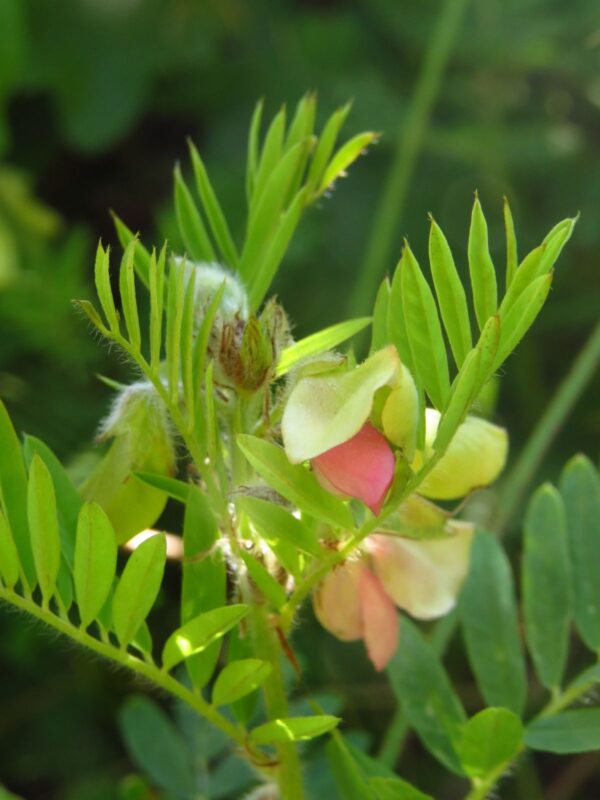
Goat’s Rue (Tephrosia virginiana), also called Devil’s Shoestrings or Hoary Pea, is a unique native wildflower that stands out in dry prairie settings. It grows up to 2 feet tall, with soft, gray-green, feather-like foliage and clusters of pea-like flowers in late spring to early summer.
The blooms are very striking and unique, with a pale yellow upper petal and deeper pink to fuchsia lower petals. After flowering, the plant develops flat, slightly hairy seed pods that add texture into late summer. Goat’s Rue supports pollinators like bees and butterflies.
Goat’s Rue thrives in full sun to partial shade and prefers dry, well-drained soils—especially sandy, gravelly, or slightly acidic sites. It’s very drought-tolerant and an excellent fit for tough, low-nutrient areas where other plants struggle. As a legume, it also helps improve soil by fixing nitrogen. This plant has a deep taproot, which makes it very resilient once established but also difficult to move or divide.
Historically, it was used by Indigenous peoples, though all parts of the plant are mildly toxic and should not be consumed. This native species (Tephrosia virginiana) should not be confused with European Goat’s Rue (Galega officinalis). That plant is often used as an herbal supplement for lactation support and blood sugar management, and is a completely different species.
Goat’s Rue pairs well with other dry prairie natives like Butterfly Milkweed (Asclepias tuberosa), Little Bluestem (Schizachyrium scoparium), Prairie Dropseed (Sporobolus heterolepis), and Lanceleaf Coreopsis (Coreopsis lanceolata).