Free Shipping on Online Seeds & Seed Mix Orders Over $100!

Generic selectors
Exact matches only
Search in title
Search in content
Post Type Selectors
Search in posts
Search in pages
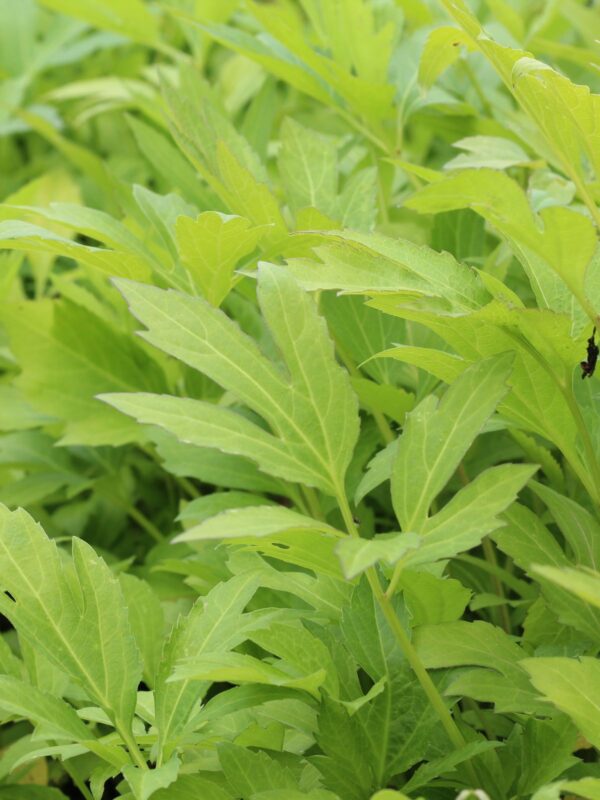
Wild Golden Glow leaves close up
Rudbeckia laciniata

Wild Golden Glow

Plants

50 Plug Tray Out of Stock

Description

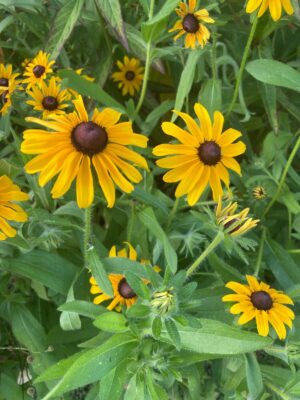
Wild Golden Glow (Rudbeckia laciniata), also known as Cutleaf Coneflower or Green-headed Coneflower, is a tall native wildflower named for its bright yellow blooms that seem to “glow” in the landscape, especially when planted in groups. Its drooping yellow petals surround a greenish center, blooming from mid to late summer and attracting bees, butterflies, and other pollinators while adding bold height.

One of the few natives to reach this height in woodland or semi-shaded settings, it brings late-season color where spring blooms have faded. It grows best in part shade to full sun and prefers moist soils, though it can handle full sun with consistent moisture.

Wild Golden Glow spreads by rhizomes and can form large colonies, making it well-suited for rain gardens, wet meadows, and naturalized areas, though it may be too aggressive for smaller plantings. Compared to other Rudbeckias, it is much taller and more moisture-tolerant than Black-eyed Susan (Rudbeckia hirta), which prefers drier soils and stays shorter. It has a looser, more natural habit than Orange Coneflower (Rudbeckia fulgida), grows larger than the shorter-lived, finer-textured Brown-eyed Susan (Rudbeckia triloba), and while Sweet Black-eyed Susan (Rudbeckia subtomentosa) is similar in height, it remains more clump-forming and less aggressive.

Historically, it is also known as “Sochan,” with young spring leaves traditionally used as food by the Cherokee.
Seed Details

Weight 15 lbs
Dimensions 22 × 12 × 11 in

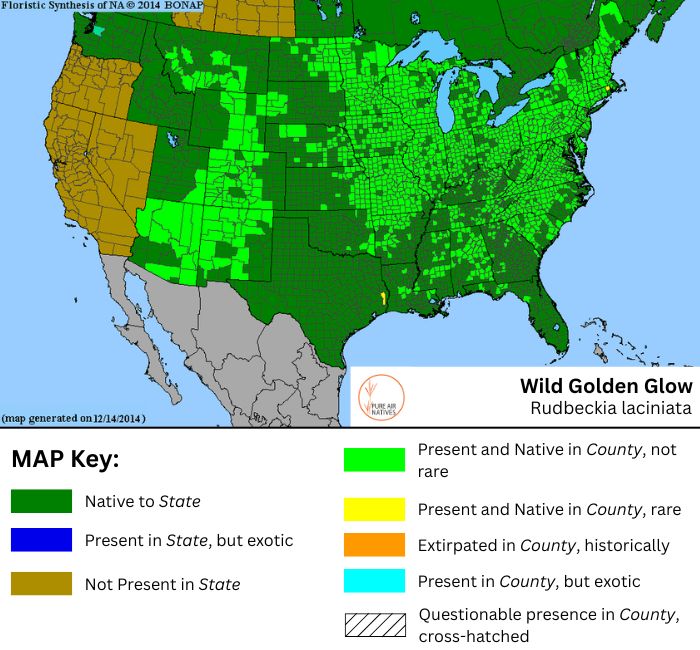
Range Map

Rudbeckia laciniata native range map

Details

SociabilityRhizomes, Colonies
Sun RequirementsFull Sun, Partial Sun, Shade
Soil MoistureMesic, Wet-Mesic
Height6-7'
USDA Zones3-8
Bloom ColorYellow
Bloom PeriodJuly, August, September, October
Plant Spacing2-3'

Seeds & Seed Mixes:

Seeds and seed mixes ship nationwide, year-round, typically within 3–5 business days. If you would like to postpone a seed mix shipment until fall, please note this at checkout.

Live Plants:

Live plants are available year-round while inventory lasts and ship to all states except California, Arizona, Oregon, Washington, Nevada, Alaska, and Hawaii. After your order is placed, we’ll contact you to coordinate a spring shipping window, as many plants are overwintered and ship once dormancy breaks.

Estimated shipping for 2026 plant orders begins in mid-April, weather permitting.

If you’re looking to secure plants in advance or need larger quantities for a project, we offer contract growing options. Contact us to discuss your needs and request a quote. Additional species not listed online may also be available through contract grow.

Live Stakes:

Live stakes are available by request only and must be ordered by submitting a contact form. Ordering is open seasonally from November 1 through February 28. A minimum of 100 stakes per order is required, with at least 25 stakes per species.

Live stakes ship only to the following states: Missouri, Minnesota, South Dakota, North Dakota, Nebraska, Kansas, Oklahoma, Arkansas, Tennessee, Kentucky, Illinois, Indiana, Ohio, Michigan, and Iowa.

PLS stands for Pure Live Seed, an industry-standard measure of seed quality. It reflects the portion of seed in a batch that is viable and capable of germinating.

What this means for you: when you purchase 1 lb. of PLS seed, the physical weight of the seed you receive will be slightly more than 1 lb. That’s because we account for non-viable seed and natural inert material upfront, so you receive a full pound of live, plantable seed.

Many companies sell bulk seed by total weight, which can include filler and non-viable seed. By pricing based on PLS, we make sure you’re getting exactly what you paid for—high-quality native seed with more predictable, successful germination.

Want to dive deeper? Check out our in-depth article on what PLS is and why it matters.