Description
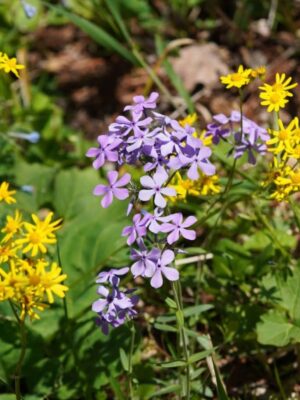
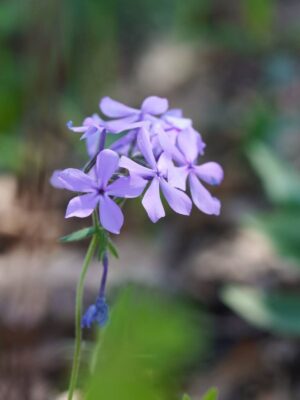
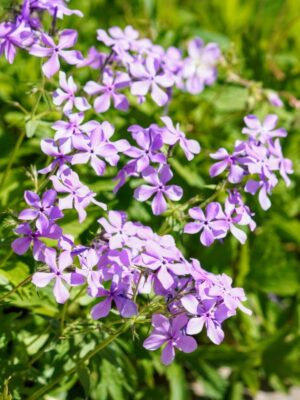
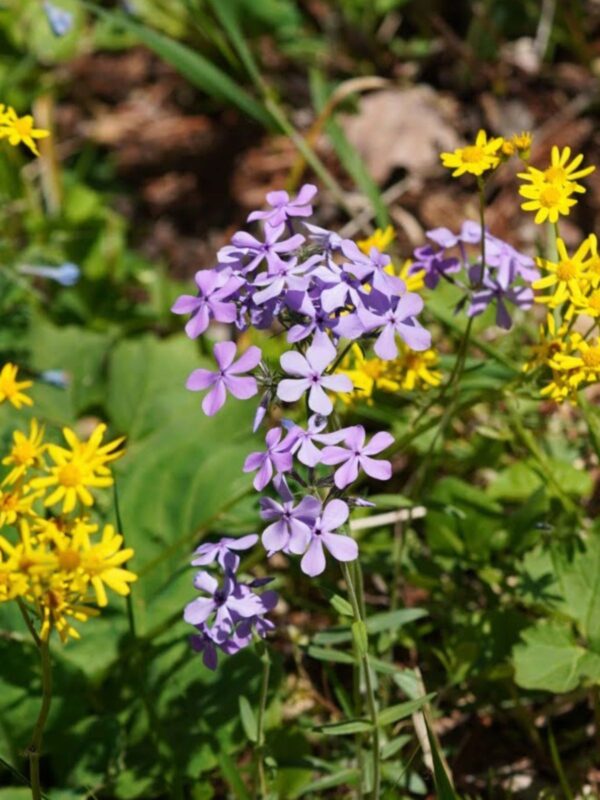
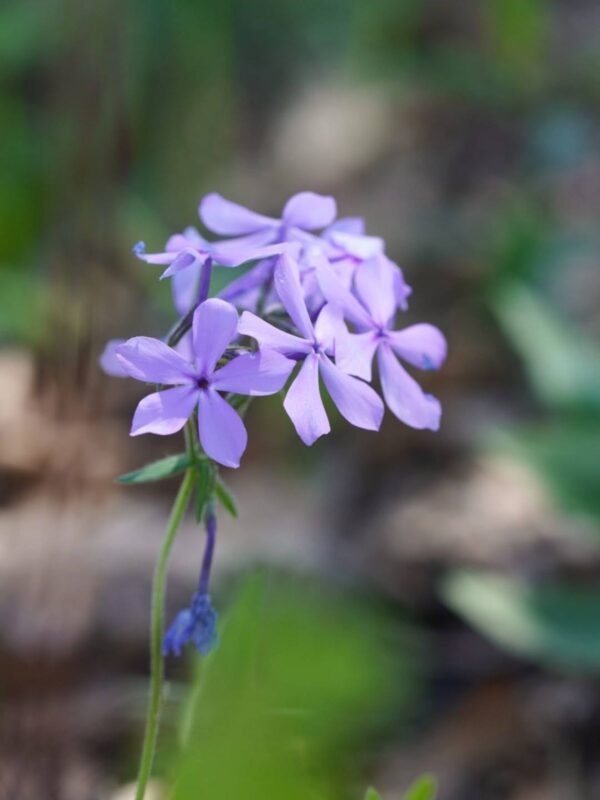
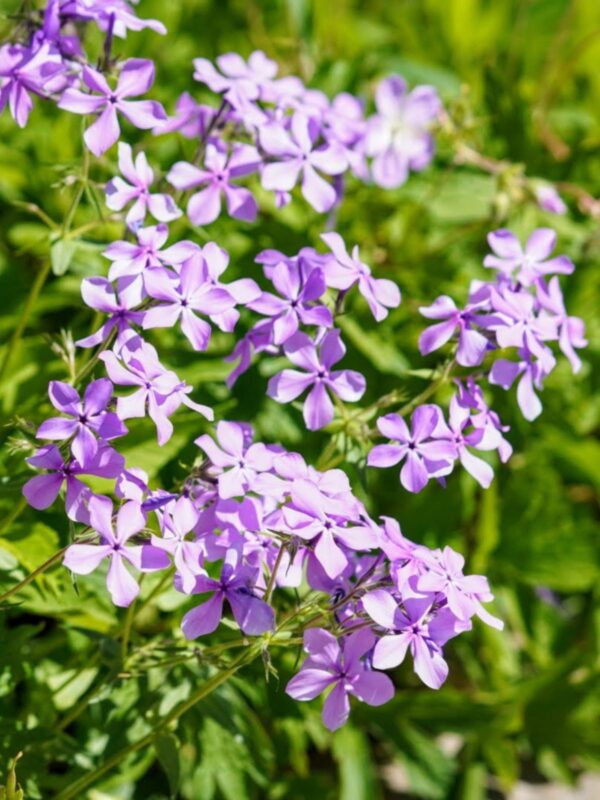
Wild Blue Phlox (Phlox divaricata), also known as Woodland Phlox or Sweet William, is a native spring wildflower known for its soft blue to lavender blooms and light fragrance. The star-shaped flowers appear in loose clusters above the foliage, creating a gentle carpet of color in shaded landscapes.
Blooming in mid to late spring, it provides nectar for bees, butterflies, and hummingbirds when few other plants are in flower. The blooms range from pale blue to violet and sit atop slightly sticky stems, adding subtle color to woodland plantings.
Wild Blue Phlox thrives in partial shade and prefers rich, well-drained soils with moderate to slightly dry moisture. It spreads slowly by rhizomes, forming loose colonies over time. Deer tend to leave it alone, though rabbits may browse it, and it works well along woodland edges and in naturalized shade gardens.
It is sometimes confused with Dame’s Rocket, a non-native invasive, but true phlox have five petals and opposite leaves, while Dame’s Rocket has four petals and alternate leaves.
Compared to Prairie Phlox (Phlox pilosa), Wild Blue Phlox is better suited for shade and woodland conditions, with a looser, spreading habit and softer flower colors. Prairie Phlox prefers full sun and drier prairie soils, forms a more upright clump, and typically has brighter pink to rose-colored blooms. Both are excellent pollinator plants, but they fill very different roles depending on light and soil conditions.