Description
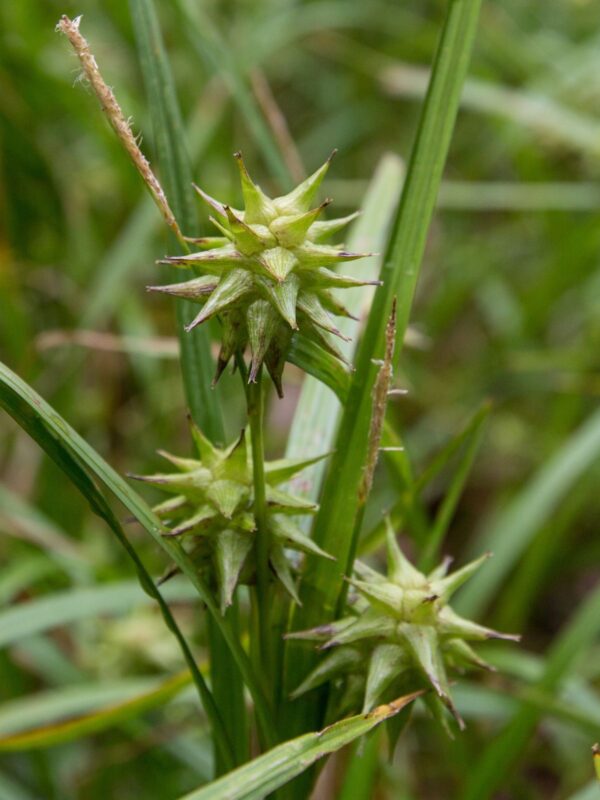
Common Bur Sedge (Carex grayi), also called Gray’s Sedge or Mace Sedge, is a native sedge named for its unique spiky seed heads that resemble small medieval maces. It forms clumps about 2–3 feet tall and stands out for its bold, star-like seed structures that appear in mid-summer.
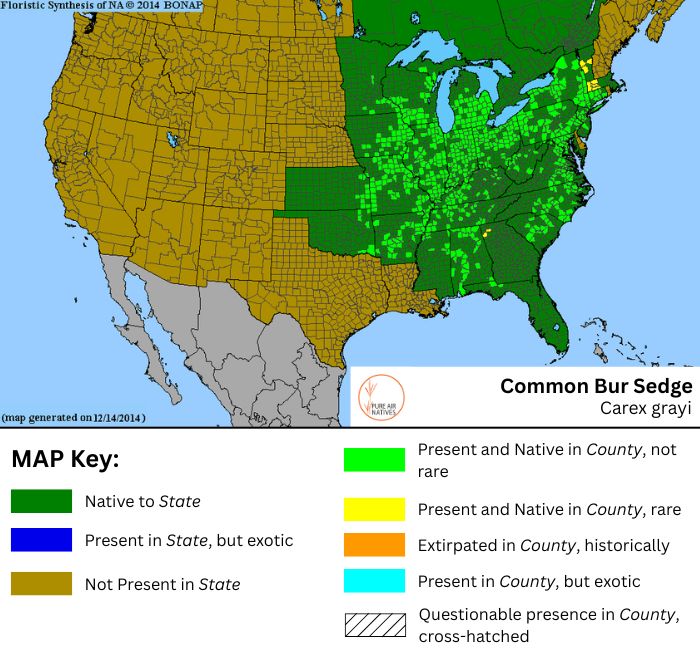
This species grows best in partial shade and moist soils but is more adaptable than many sedges. It can handle full sun if moisture is consistent and tolerates occasional flooding. You’ll find it naturally along woodland edges, streambanks, and in floodplain areas.
Common Bur Sedge spreads slowly by short rhizomes to form loose colonies. It works well in rain gardens, woodland plantings, and naturalized landscapes where moisture is available. The seed heads add strong texture and are often used in fresh or dried arrangements.
While sedges are wind-pollinated and don’t attract many insects, they play an important role for wildlife. The foliage supports some butterfly larvae, and the seeds are eaten by birds, small mammals, and other wildlife.