Description
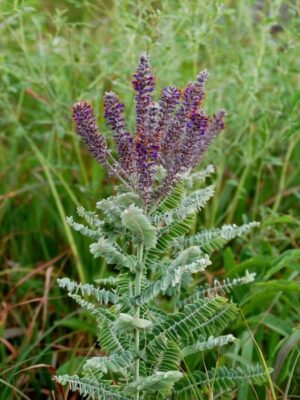
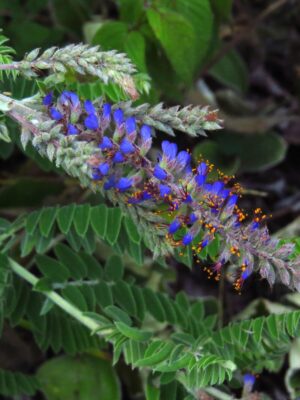
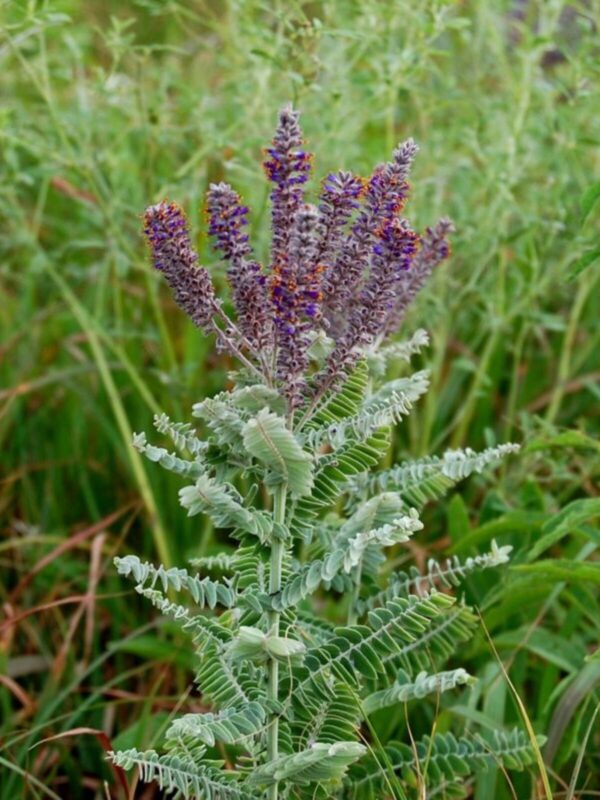
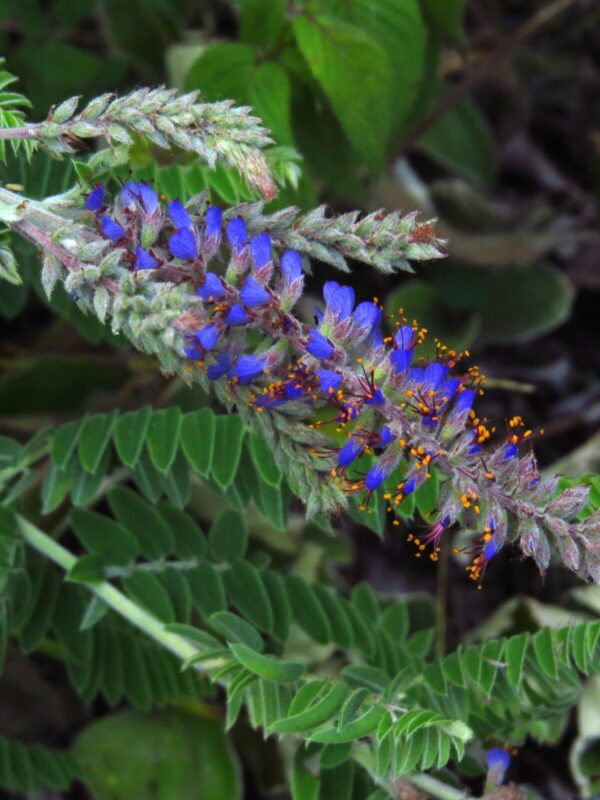
Lead Plant (Amorpha canescens), also called Prairie Shoestring or Leadplant Amorpha, is a tough native prairie shrub known for its silvery-gray foliage and unique purple flower spikes. In early summer, tall stems produce dense clusters of tiny purple flowers with bright orange stamens, creating one of the most striking bloom displays in the prairie.
This long-lived plant takes patience. Lead Plant can take several years to mature and flower, but once established, it is extremely resilient and can live for decades. Its deep root system, sometimes reaching over 10 feet into the ground, helps it survive drought, fire, and harsh prairie conditions. Early settlers reportedly nicknamed it “Devil’s Shoestrings” because the strong roots made plowing difficult.
Lead Plant thrives in full sun and prefers dry to medium, well-drained soils. It handles sandy, rocky, loamy, and even clay soils with ease once established. It can tolerate partial shade, but plants may become looser and produce fewer flowers.
The soft gray-green foliage gives the plant its common name, though some believe “Lead Plant” may also refer to early beliefs that it indicated underground lead deposits. The plant itself is a small shrub, usually growing 1 to 3 feet tall, and adds structure to prairie plantings even when not in bloom.
Lead Plant is highly valuable for pollinators. It attracts native bees, butterflies, moths, beetles, and many other beneficial insects. It is also a host plant for the Dogface Sulphur butterfly. Deer generally leave mature plants alone, though young plants may need some protection while establishing.
Lead Plant pairs well with other dry prairie natives like Little Bluestem (Schizachyrium scoparium), Northern Dropseed (Sporobolus heterolepis), Purple Prairie Clover (Dalea purpurea), Butterfly Milkweed (Asclepias tuberosa), and Pale Purple Coneflower (Echinacea pallida).