Description
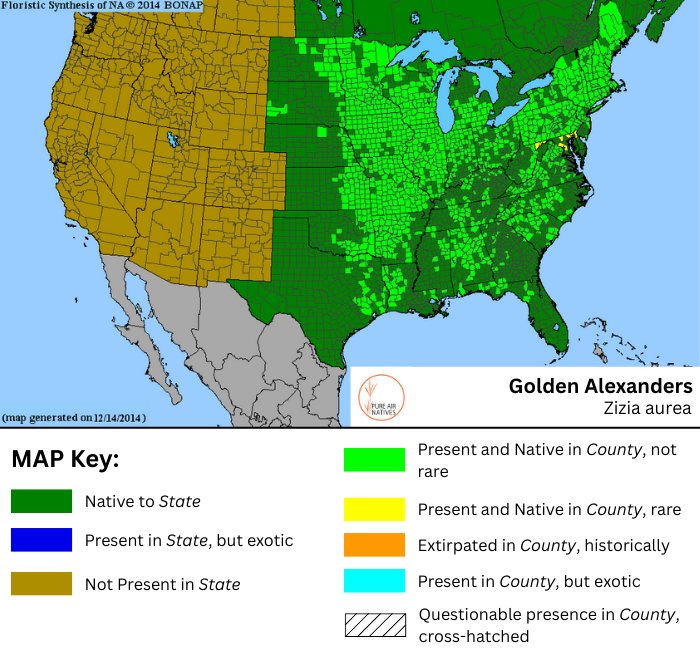
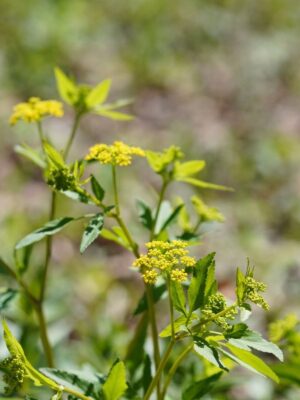
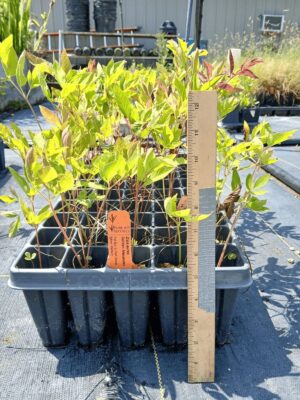
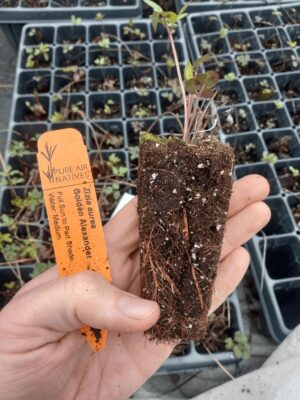
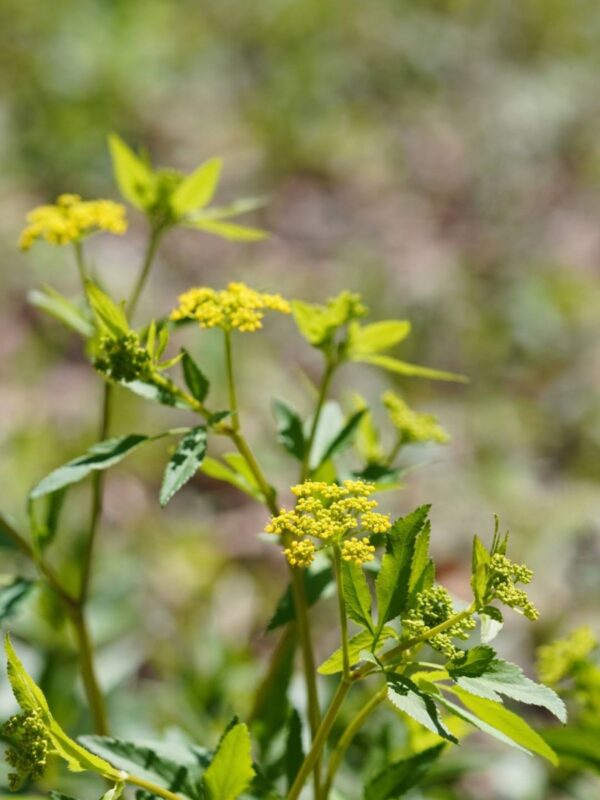
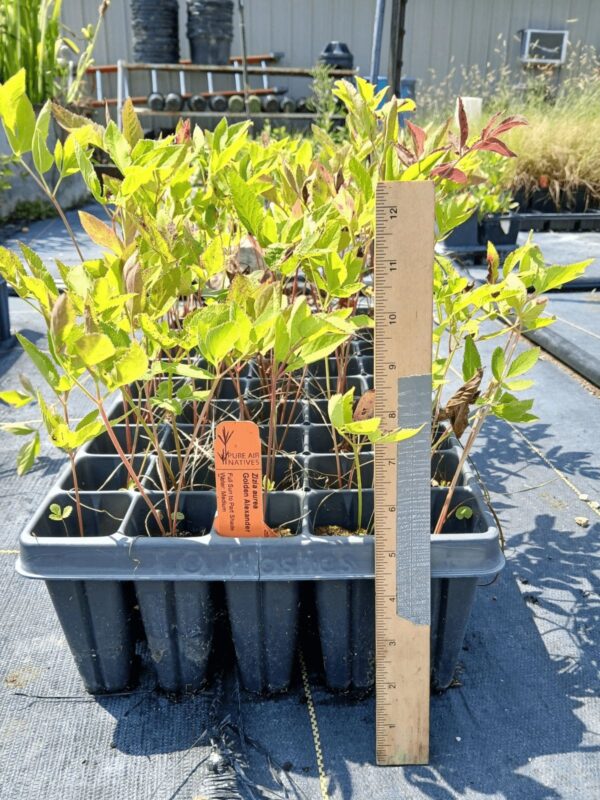
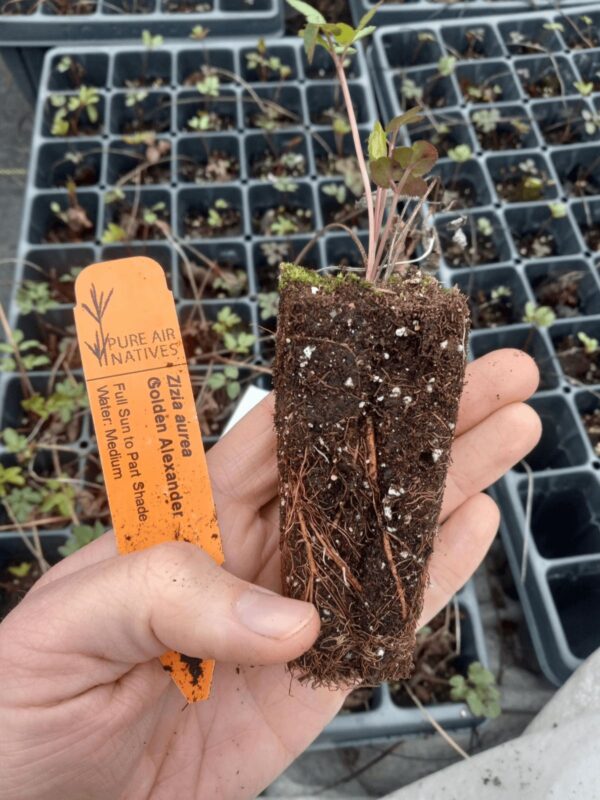
Golden Alexanders (Zizia aurea), also called Golden Zizia, is a bright, early-season native wildflower in the carrot family (Apiaceae). Named after botanist Johann Baptist Ziz, it produces clusters of small yellow flowers in flat umbels that bring color to the landscape in late spring to early summer.
It grows in full sun to partial shade and does especially well in moist, well-drained soils, including clay. Though somewhat short-lived, it self-seeds easily and returns year after year in the right conditions. You’ll often find it in prairies, meadows, and woodland edges.
Golden Alexanders is an important plant for wildlife. It serves as a host for Black Swallowtail and Ozark Swallowtail butterflies, and its nectar attracts a wide range of short-tongued pollinators. Its long bloom time helps fill the early-season gap before many summer plants begin flowering.
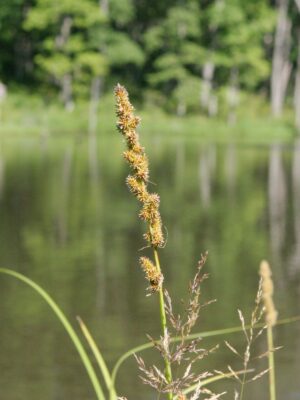
It pairs well with species like Blue Wild Indigo (Baptisia australis), Red Columbine (Aquilegia canadensis), and Fox Sedge (Carex vulpinoidea), which share similar conditions and provide seasonal layering.
A close relative, Heart-leaf Golden Alexanders (Zizia aptera), is also available and can be hard to distinguish at a glance. It tends to have heart-shaped basal leaves and can tolerate slightly drier conditions. Both species are valuable additions to native plantings.
These native species should not be confused with Wild Parsnip (Pastinaca sativa), an invasive lookalike that blooms later and can cause skin irritation.