Description
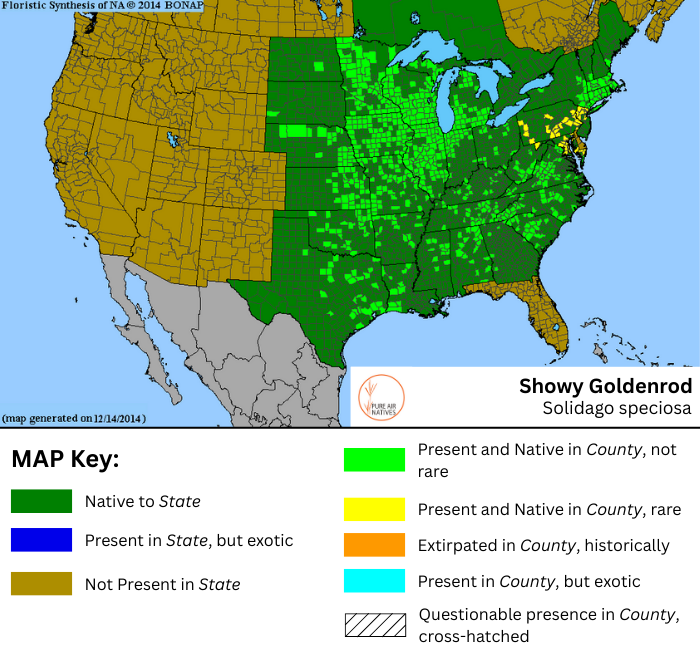
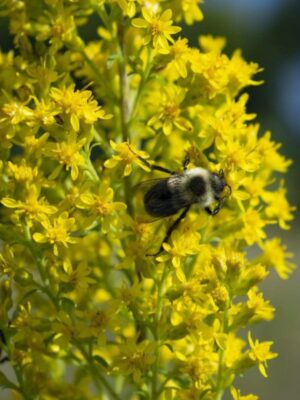
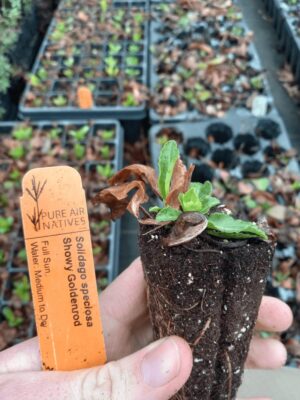
Showy Goldenrod (Solidago speciosa) lives up to its name with dense, upright clusters of bright yellow flowers that bloom from late summer into fall. Growing 3–5 feet tall, it stands on sturdy, often reddish stems and provides strong vertical color late in the season.
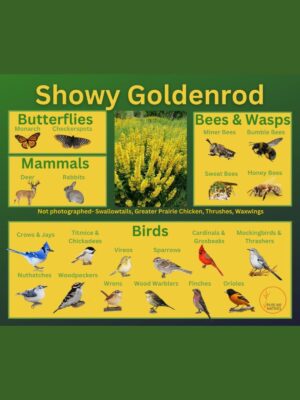
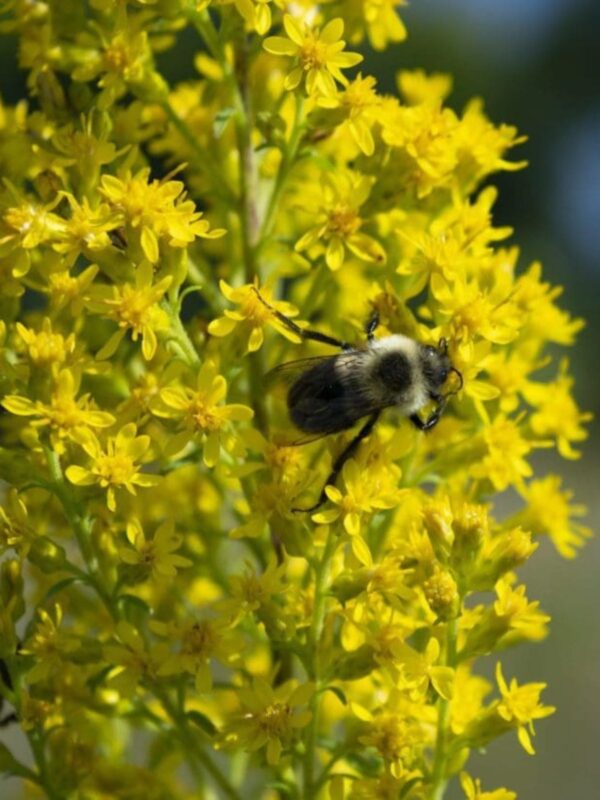
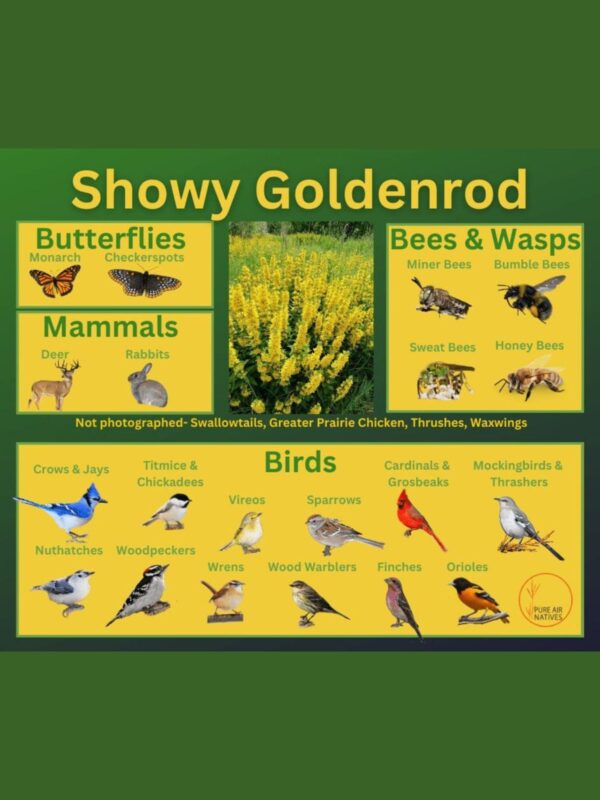
This species blooms slightly later than many other goldenrods, making it especially valuable for late-season pollinators like bees, butterflies, and migrating insects. The flower clusters are more upright and compact than the arching forms seen in other species, giving it a cleaner, more structured look.
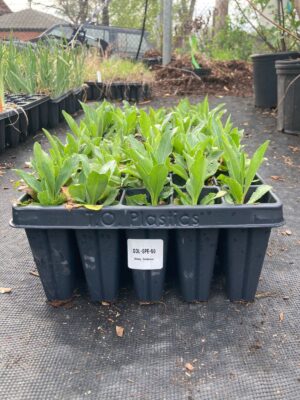
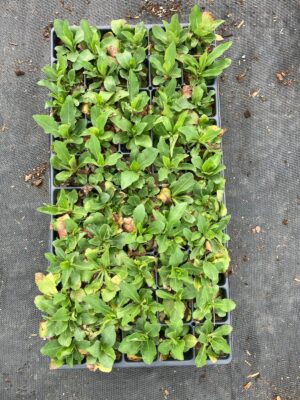
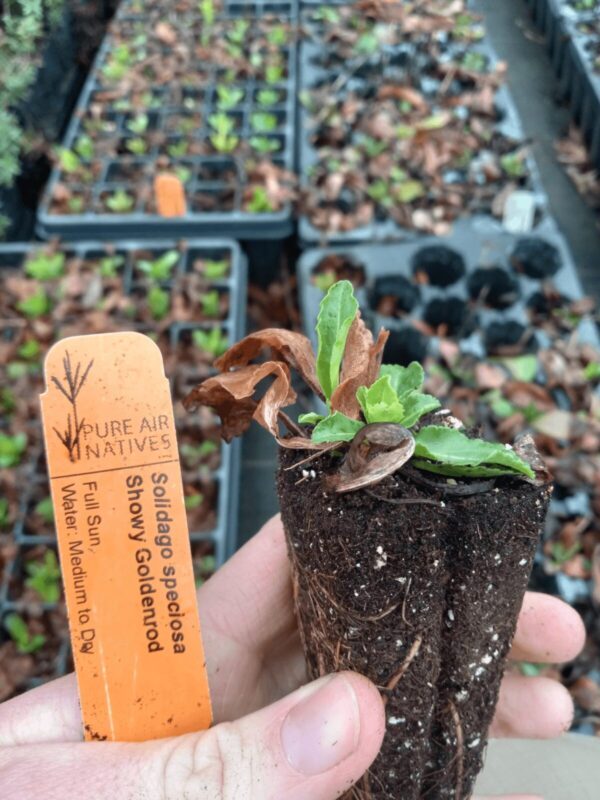
Showy Goldenrod grows best in full sun to partial shade and handles dry to medium soils with ease. It is drought-tolerant, deer-resistant, and easy to grow. Unlike more aggressive goldenrods, it has a fibrous root system and forms clumps rather than spreading by rhizomes, making it a better fit for garden settings.
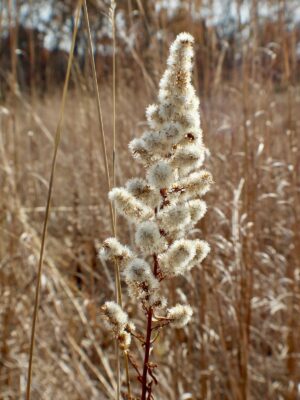
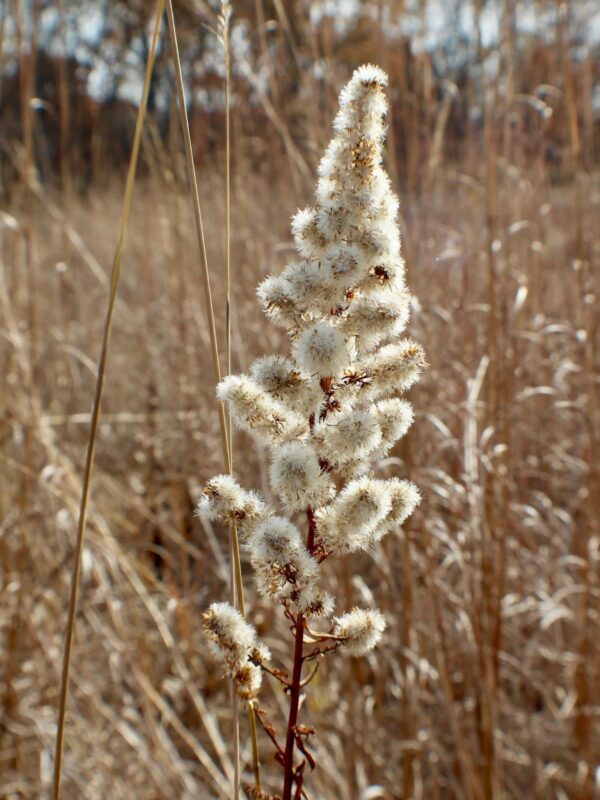
After flowering, the plant develops soft, fluffy seed heads that persist into winter. These add visual interest and texture to the landscape while also providing food for birds. Leaving the stems standing through winter can enhance both wildlife value and seasonal appeal.
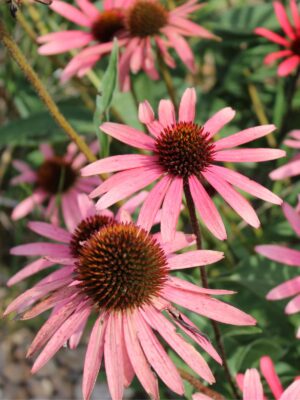
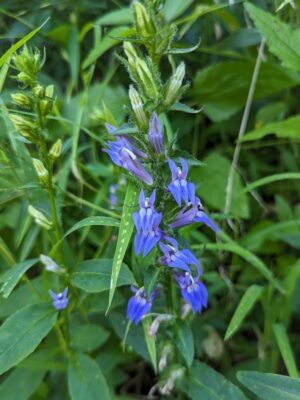
It pairs well with other fall-blooming natives like New England Aster (Symphyotrichum novae-angliae), Rough Blazing Star (Liatris aspera), Sweet Black-eyed Susan (Rudbeckia subtomentosa), and Aromatic Aster (Symphyotrichum oblongifolium), creating a beautiful late-season display.
Despite common misconceptions, goldenrods do not cause allergies. Their pollen is heavy and insect-carried, unlike ragweed, which is responsible for hay fever.