Description
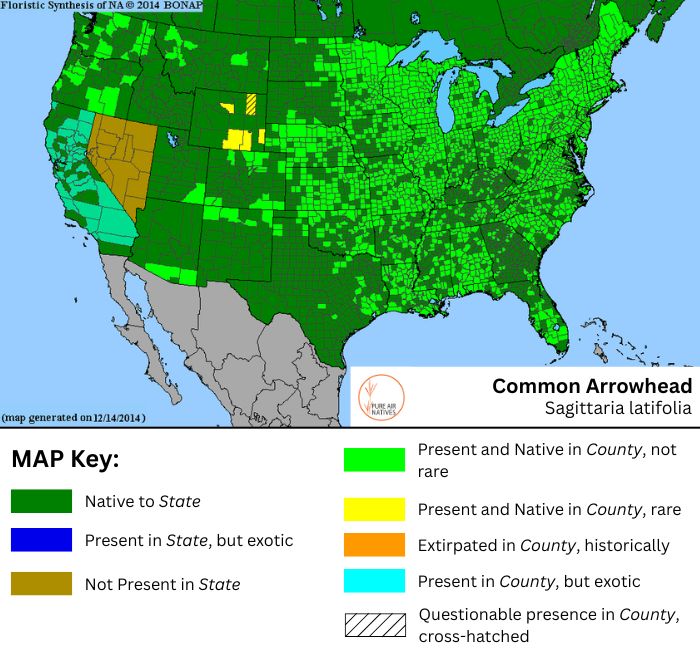
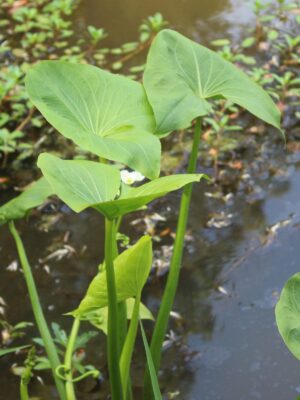
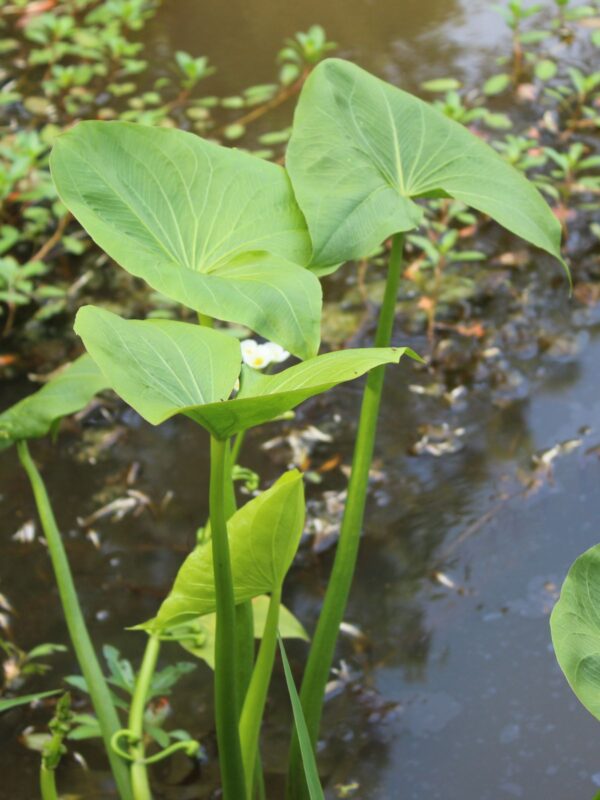
Common Arrowhead (Sagittaria latifolia), also known as Duck Potato or Wapato, is a native aquatic plant named for its distinctive arrow-shaped leaves (sagitta means “arrow” in Latin). It grows naturally along pond edges, marshes, and slow-moving water across much of North America.
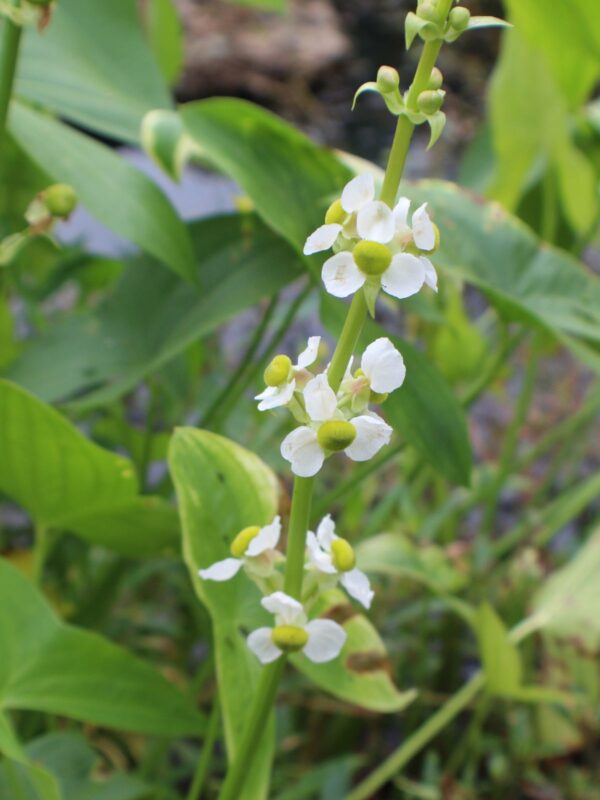
In mid to late summer, tall stems rise above the foliage and produce clusters of white, three-petaled flowers with bright yellow centers, arranged in whorls along the stem. These blooms attract pollinators, while the plant’s underground tubers—known as “duck potatoes”—provide an important food source for ducks, muskrats, and other wildlife. These starchy tubers were also historically used as a food source by Native Americans.
Common Arrowhead thrives in full sun to partial shade and grows best in very wet soils, shallow water, or standing water. It spreads by rhizomes to form colonies, helping stabilize shorelines and improve wetland habitats.
Reaching up to about 3 feet tall, it adds strong vertical structure to aquatic plantings. It’s a great fit for pond margins, rain gardens, and wetland restorations where consistent moisture or standing water is present.
Common Arrowhead pairs well with other aquatic and shoreline plants like Mud Plantain (Alisma subcordatum), Pickerelweed (Pontederia cordata), and Northern Blue Flag Iris (Iris versicolor), which share similar growing conditions. Together, they share similar growing conditions and help create a layered, natural look along pond edges and wetlands.