Description
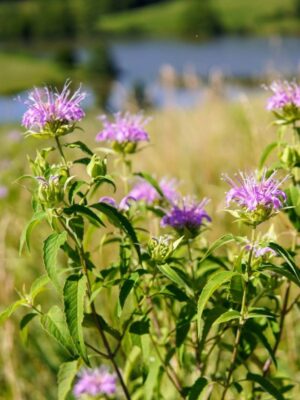
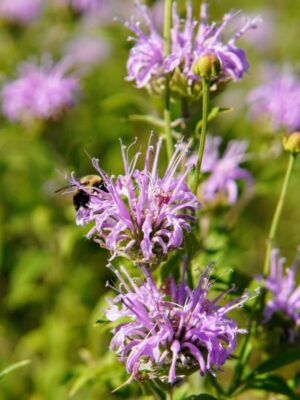
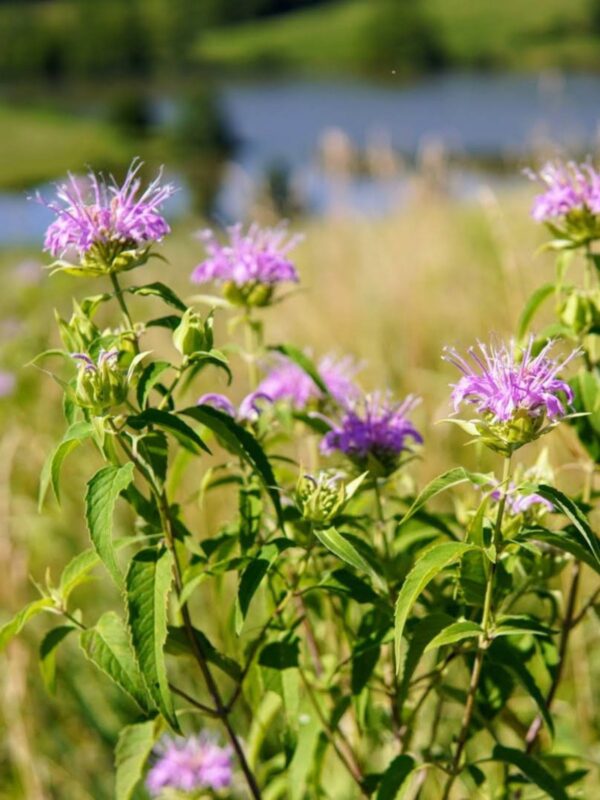
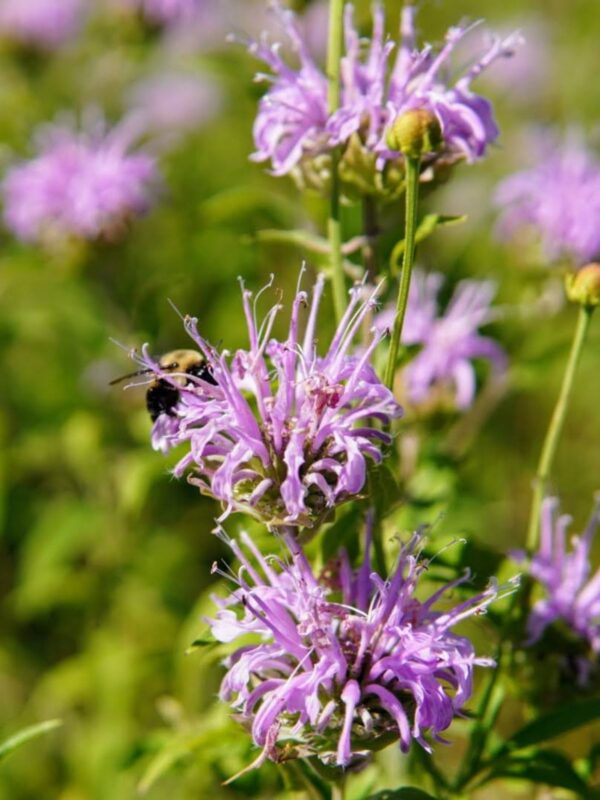
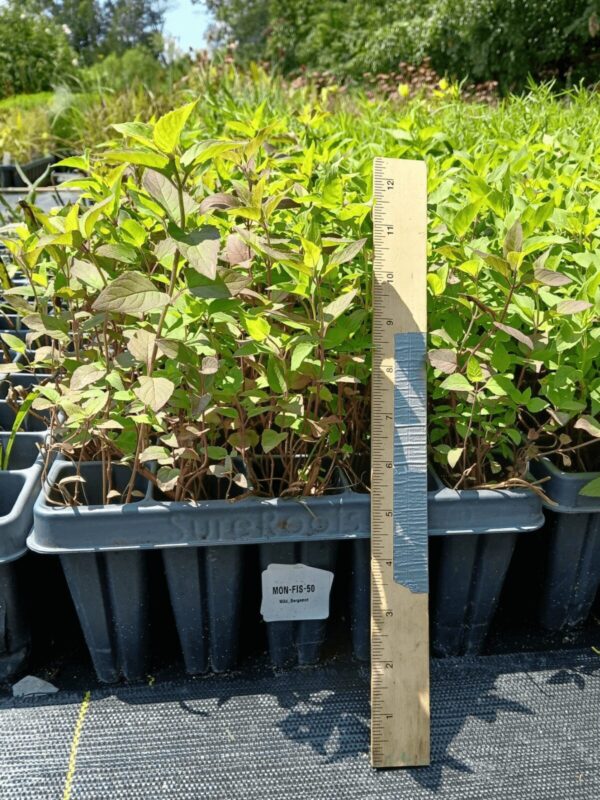
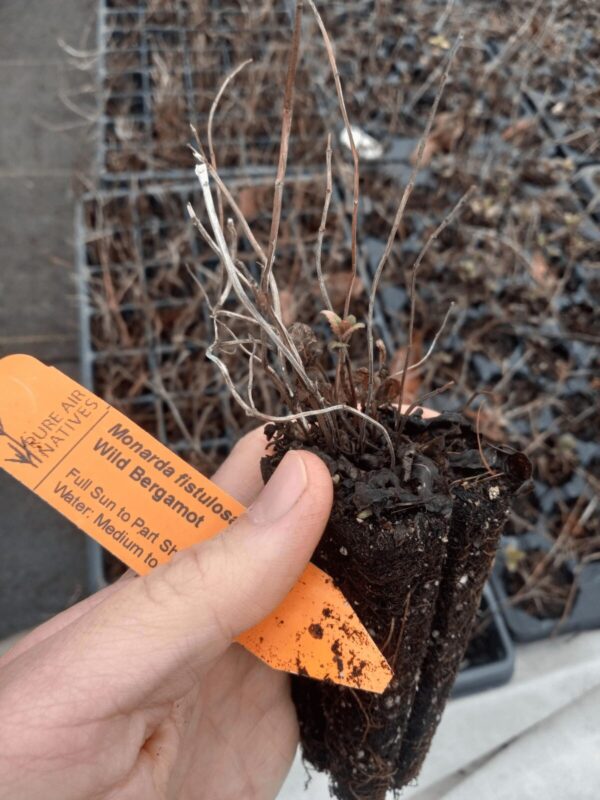
Wild Bergamot (Monarda fistulosa), also called Bee Balm or Horsemint, is a tough, aromatic native wildflower with soft lavender blooms and minty-scented foliage. The name fistulosa refers to the tubular shape of its flowers, which are well-suited for pollinators.
It is sometimes confused with Eastern Beebalm (Monarda bradburiana) and Ohio Horsemint (Blephilia ciliata). Both are shorter and bloom earlier, while Wild Bergamot grows taller, blooms in summer, and has larger, looser lavender flower clusters.
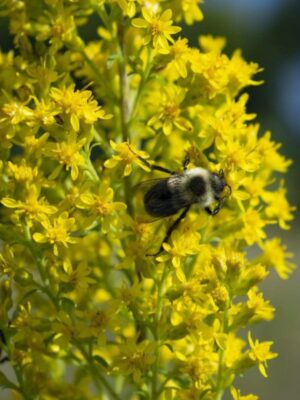
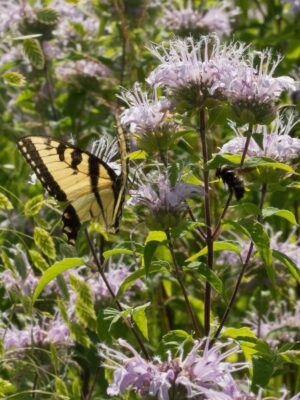
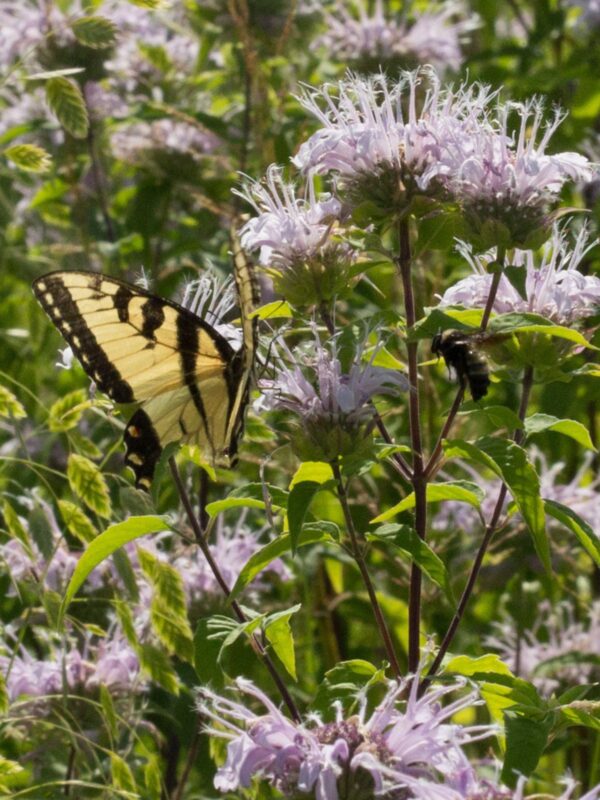
Blooming from July through September, it produces clusters of tube-like flowers that attract bees, butterflies, and hummingbirds. It is especially valuable for native bees and serves as a host plant for the Raspberry Pyrausta butterfly and the Hermit Sphinx moth.
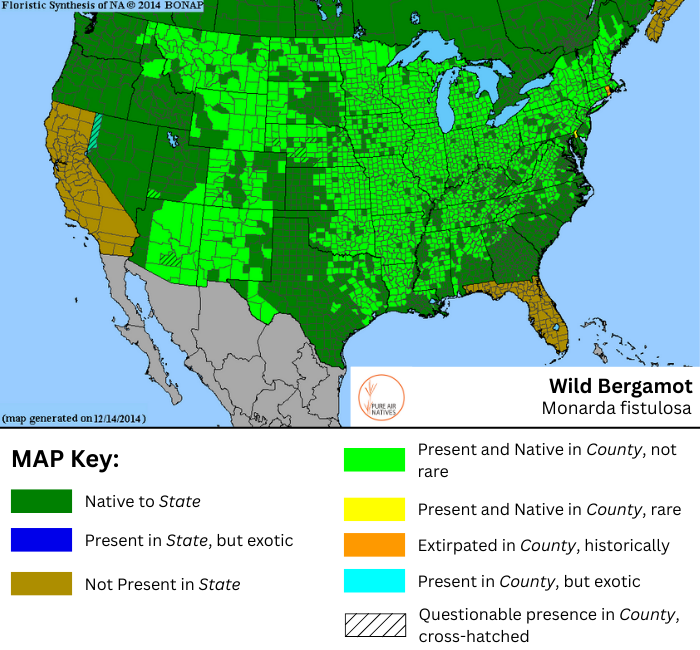
Wild Bergamot grows best in full sun to partial shade and prefers well-drained soils. It tolerates dry to moderately moist conditions, including clay soils, as long as they are not compacted or consistently wet. It is commonly found in prairies and savannas and works well in naturalized plantings and pollinator gardens. Once established, it spreads gradually by rhizomes and can form colonies over time.
Historically, it was used by Indigenous peoples for teas, poultices, and other medicinal purposes.
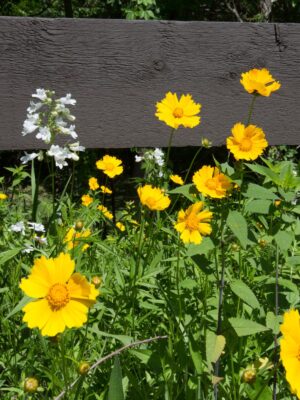
Wild Bergamot pairs well with Black-eyed Susan (Rudbeckia hirta), Purple Coneflower (Echinacea purpurea), and Little Bluestem (Schizachyrium scoparium).