Description
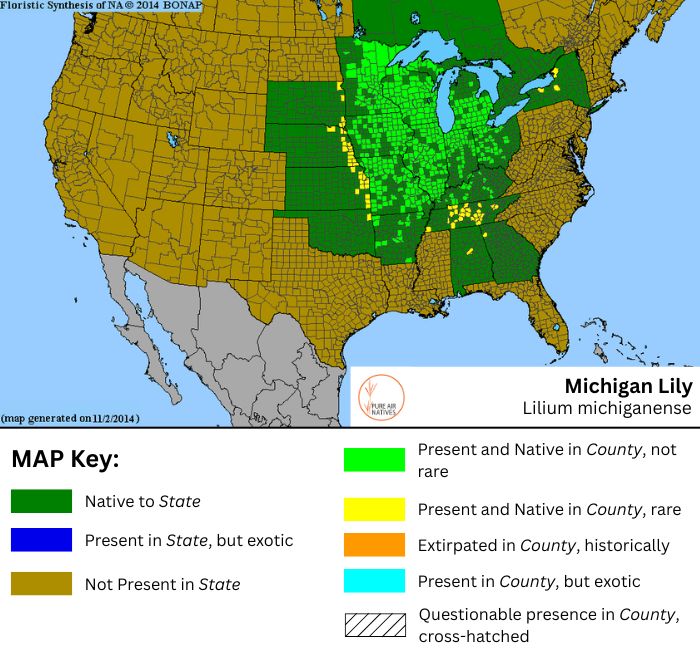
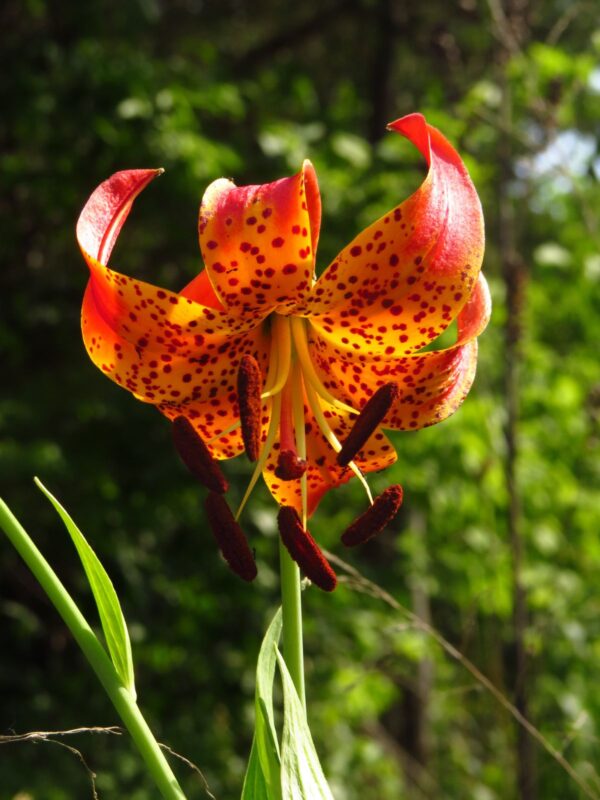
Michigan Lily (Lilium michiganense) is one of the most striking native lilies of North American prairies and wetlands. Tall stems rise above surrounding vegetation, bearing multiple nodding flowers with bright orange to red-orange petals covered in dark spots and strongly recurved tips, giving it a graceful, “turk’s cap” appearance.
Blooming in early to mid-summer, the showy flowers attract a wide range of pollinators, including bees, butterflies, hummingbirds, and frequently Swallowtail butterflies. Its bold orange color and distinctive form make it a standout in native plantings and woodlands.
Michigan Lily grows best in full sun to partial shade and prefers medium to moist soils. It is commonly found in moist prairies, meadows, and along wetland edges, and performs well near ponds, streams, or in perennial borders with consistent moisture. It can be slow and somewhat challenging to establish from seed but becomes a reliable and long-lived addition once established.
Best used in naturalized settings, its tall stems emerge well through surrounding grasses and companion plants like White Turtlehead (Chelone glabra) and Sweet Joe-Pye Weed (Eutrochium purpureum), adding height, movement, and seasonal color. Though sometimes confused with Turk’s Cap Lily, Michigan Lily is a distinct separate species.