Description
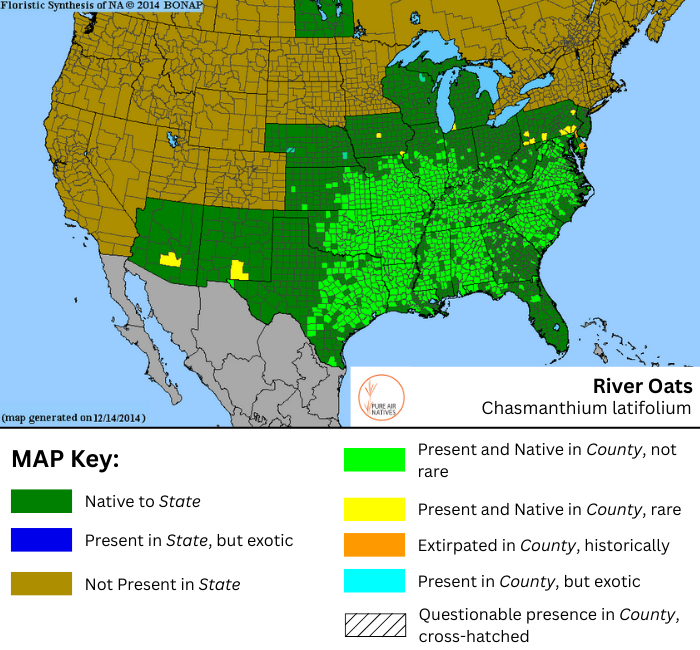
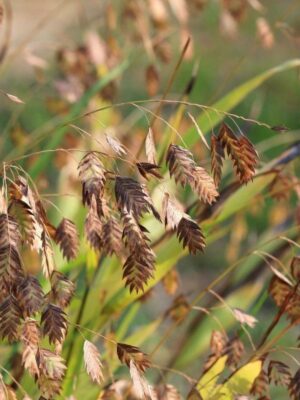
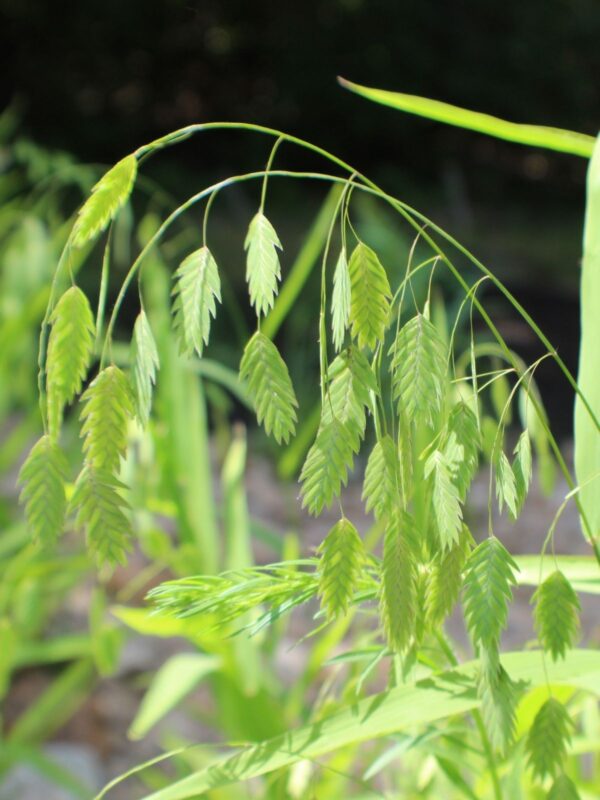
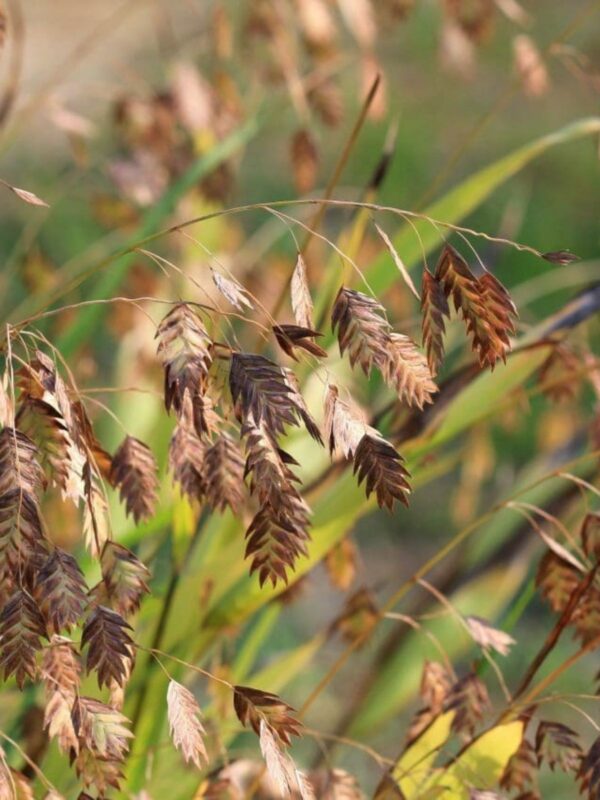
River Oats (Chasmanthium latifolium), also known as Northern Sea Oats and formerly classified as Uniola latifolia, is a native cool-season grass with arching stems and distinctive drooping seed heads. Growing up to 5 feet tall, it produces oat-like spikelets that start off as green and turn golden brown as they mature. The seed heads persist into winter and can be used in fresh or dried floral arrangements.
River Oats grows best in part shade to full shade and prefers moist, well-drained soils. It tolerates clay, sand, and poorer soils once established and can also grow in full sun when adequate moisture is available. It is commonly found along streambanks, creek beds, woodland edges, slopes, and other moist sites. Its spreading root system (rhizomes) makes it useful for erosion control.
River Oats spreads readily by both seed and rhizomes and can form dense colonies. Be careful planting River Oats in smaller spaces, as it can spread aggressively through prolific self-seeding. Removing the seed heads before they mature can help keep it under control. For winter protection, leave the foliage standing and cut it back to the ground in early spring.
River Oats provides important habitat and food for wildlife. Its seeds are eaten by birds and small mammals, while the foliage serves as a host plant for caterpillars including the Northern Pearly-eye and Pepper and Salt Skipper. Its dense growth also provides cover and helps stabilize soil.
River Oats is well suited to shady gardens, rain gardens, woodland plantings, streambanks, erosion-control projects, and habitat restoration where moist soils are available.