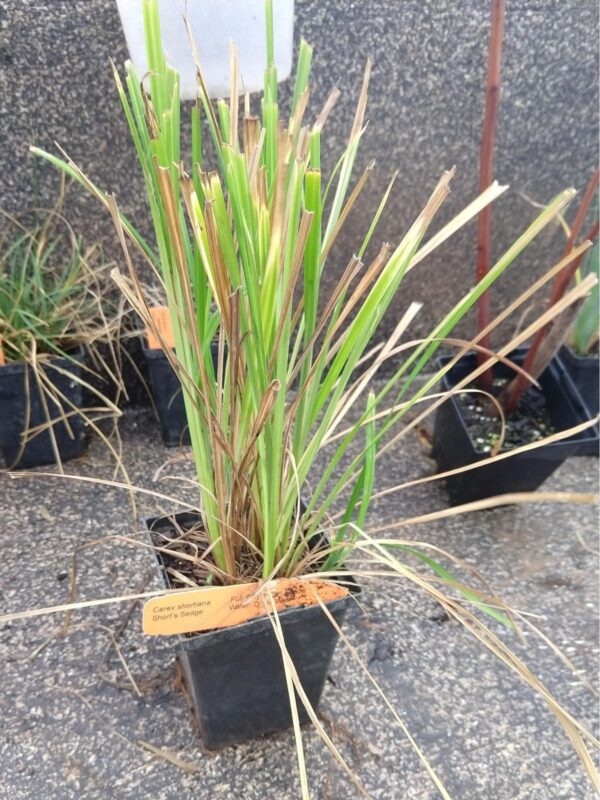
Description
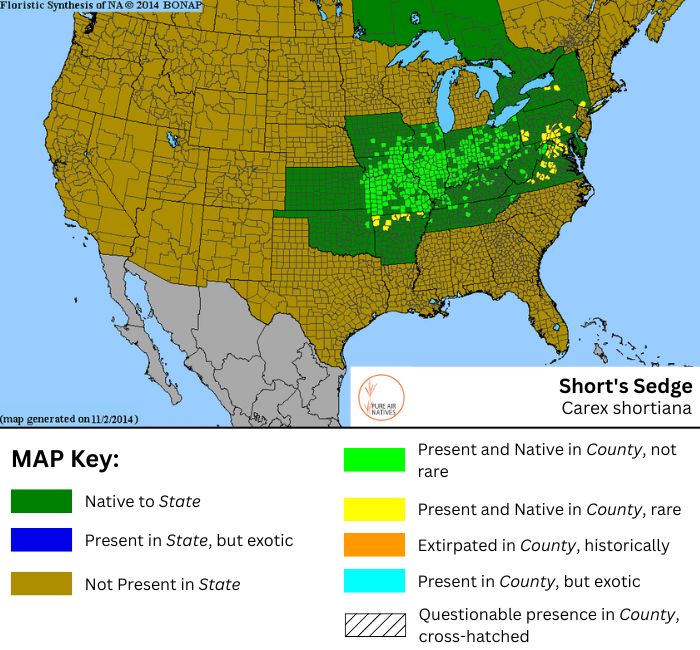
Short’s Sedge (Carex shortiana) is a versatile native sedge that forms upright clumps about 2–3 feet tall. It grows across much of the central and eastern United States and adapts well to a range of conditions.
It thrives in full sun to full shade and prefers medium to medium-wet soils. You’ll find it in woodland edges, moist prairies, floodplains, and along streams and ponds. It’s a strong choice for rain gardens, shoreline plantings, and low areas where moisture is present.
Like most sedges, it is a cool-season grower, with most growth happening in spring and fall. It has light green, narrow leaves and produces small green flowers from May through July. By early summer, it develops distinctive dark brown seed heads that resemble slender pinecones.
Short’s Sedge provides important wildlife value. Its foliage supports caterpillars of butterflies and moths, and the seeds are eaten by songbirds, waterfowl, and gamebirds. Easy to grow and adaptable, it works well in both naturalized landscapes and designed plantings where a taller, structured sedge is needed.
It pairs well with other moisture-tolerant sedges like Common Bur Sedge (Carex grayi), Common Hop Sedge (Carex lupulina), and Yellowfruit Sedge (Carex annectens), which share similar growing conditions but offer different textures and forms. It also works well with wetland species like Soft Rush (Juncus effusus) and Blue Vervain (Verbena hastata) to create a layered, natural look in rain gardens and shoreline plantings.