Description
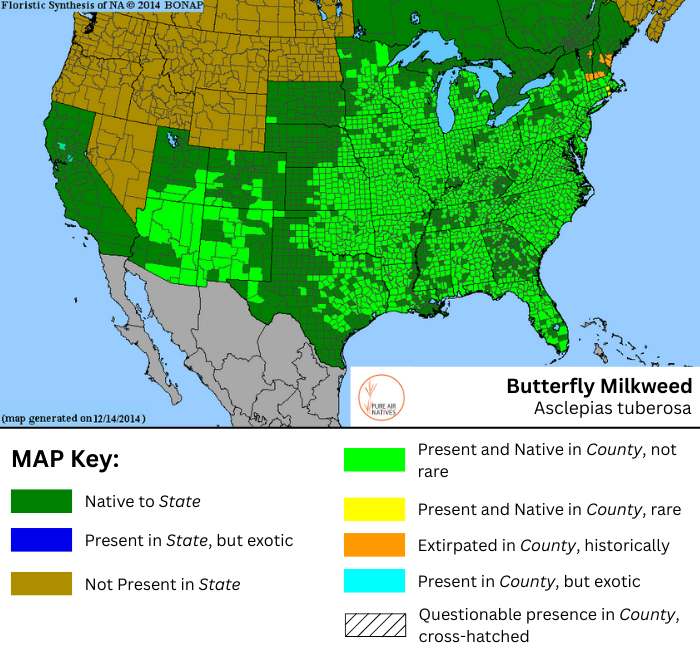
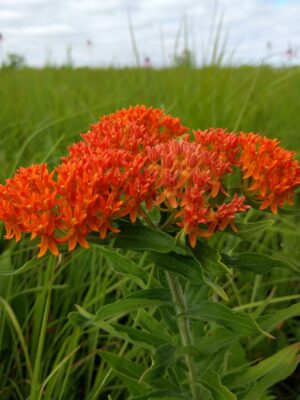
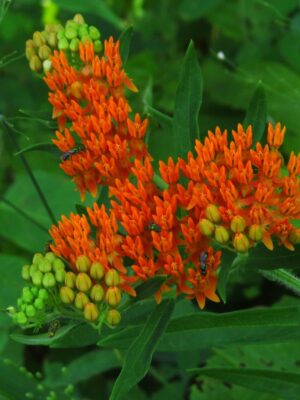
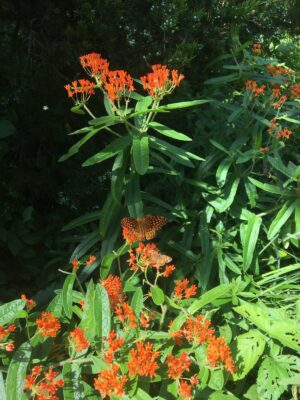
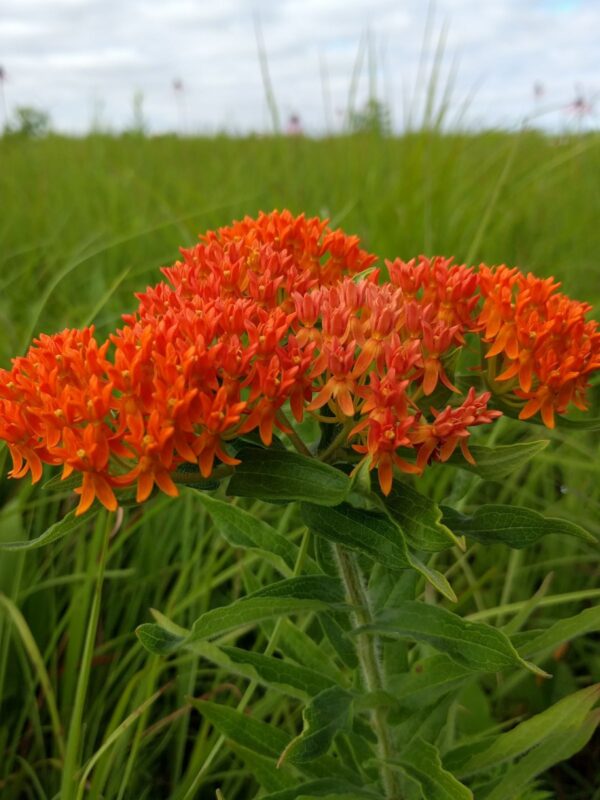
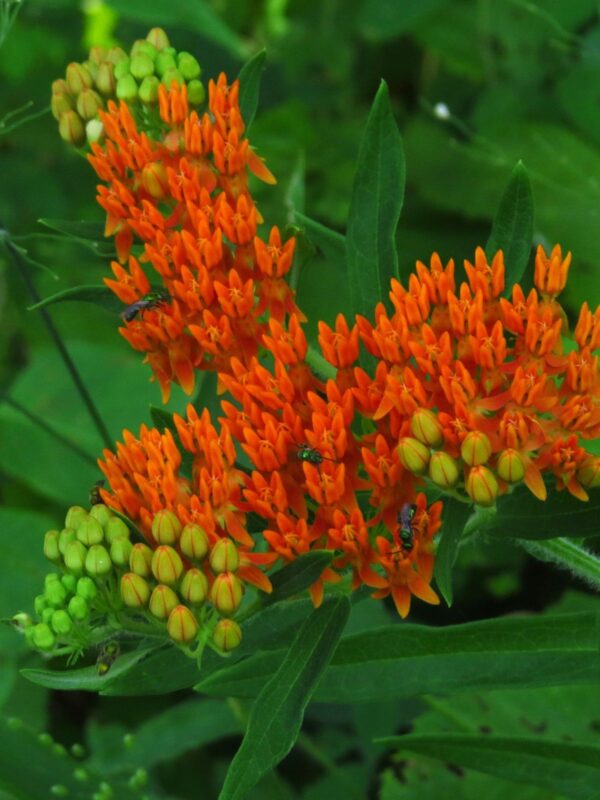
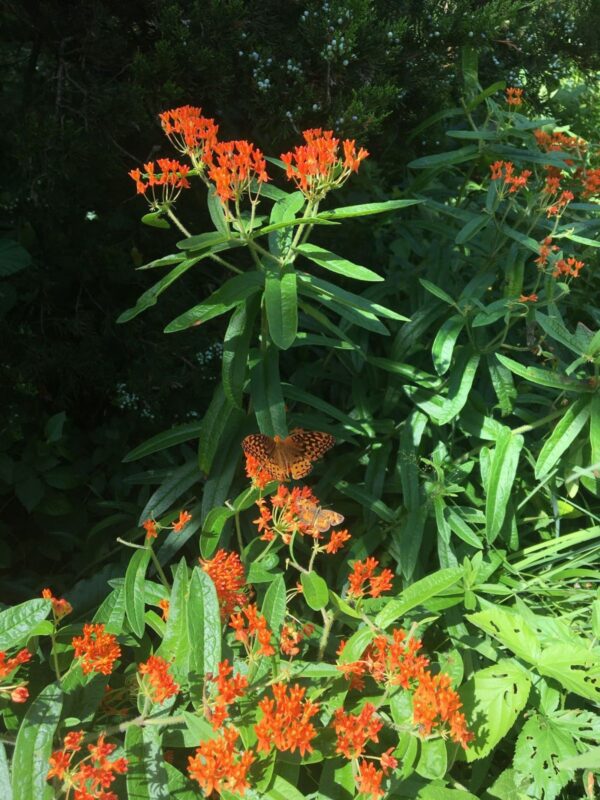
Butterfly Milkweed (Asclepias tuberosa), also called Butterfly Weed, is a standout native known for its bright orange flowers, though blooms can range from deep orange-red to yellow. Unlike most milkweeds, it does not produce milky sap, which makes it easy to identify.
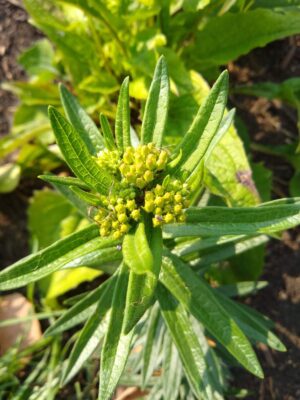
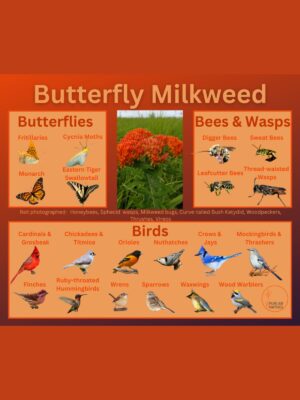
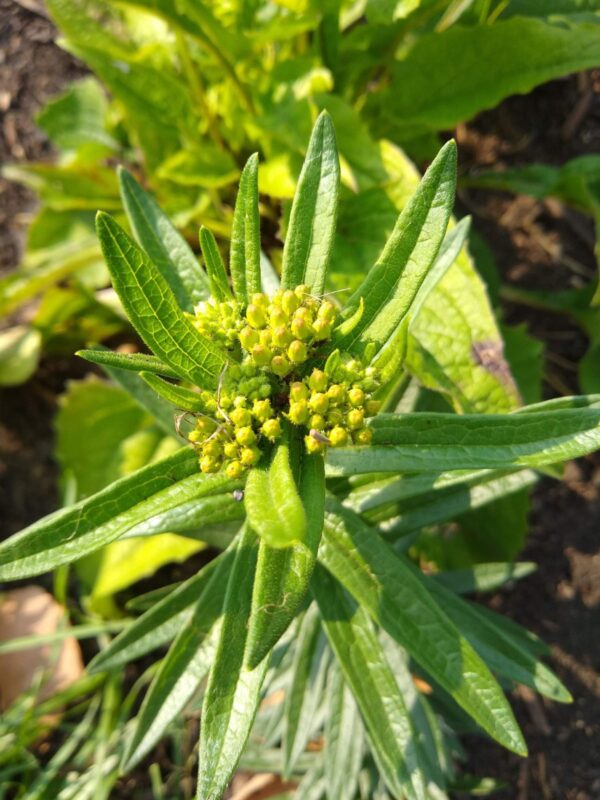
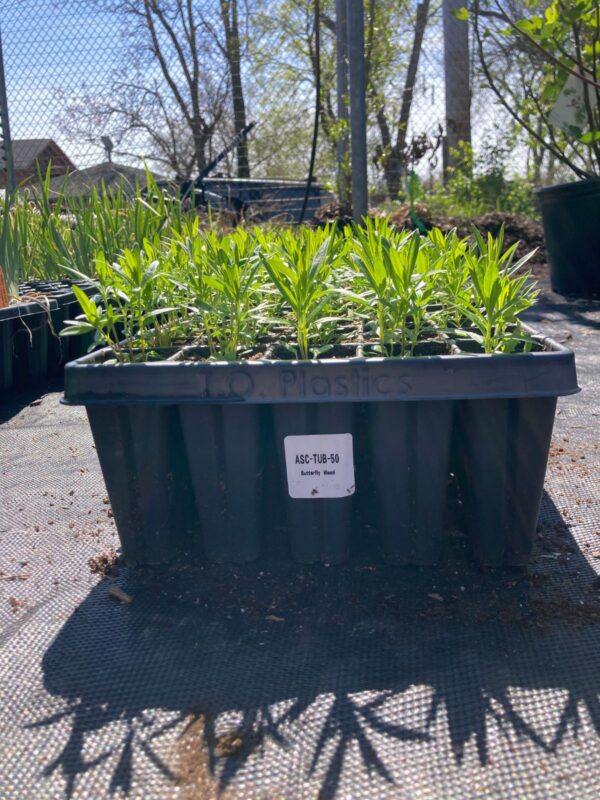
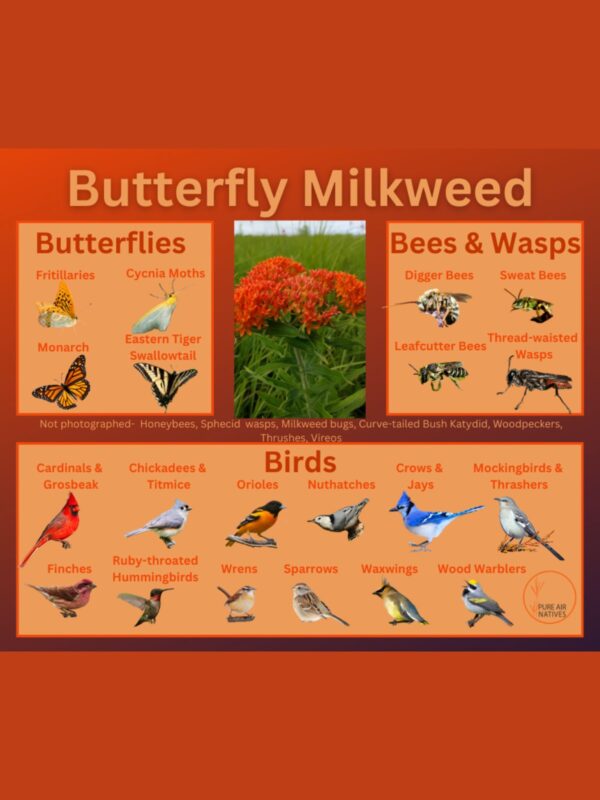
Its leaves are narrow and lance-shaped, with a deep green color and little to no leaf stalk. They are arranged alternately along upright, branching stems, giving the plant a clean, structured look. The stems are sturdy and slightly fuzzy, forming a compact, bushy clump rather than a tall, open plant. Blooming from late spring through summer, it produces flower clusters that attract a wide range of pollinators. It is especially important as a host plant for Monarch butterflies, providing a place for them to lay eggs and for caterpillars to feed. The nectar also supports adult butterflies throughout the season.
Butterfly Milkweed grows best in full sun and it thrives in sandy, rocky, or lean soils and is highly drought-tolerant and low-maintenance once established. It develops a deep taproot, which helps it survive tough conditions. Because of its preference for dry conditions, it is best suited for prairies, slopes, and well-drained garden beds rather than wet areas.
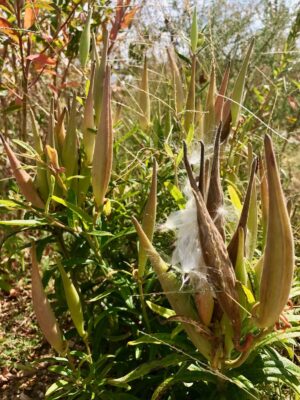
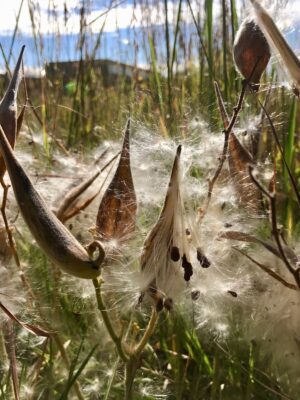
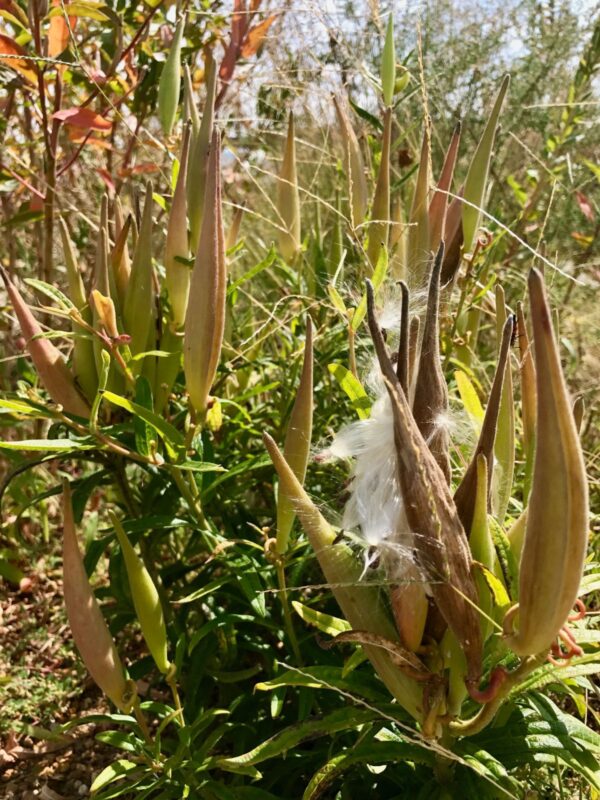
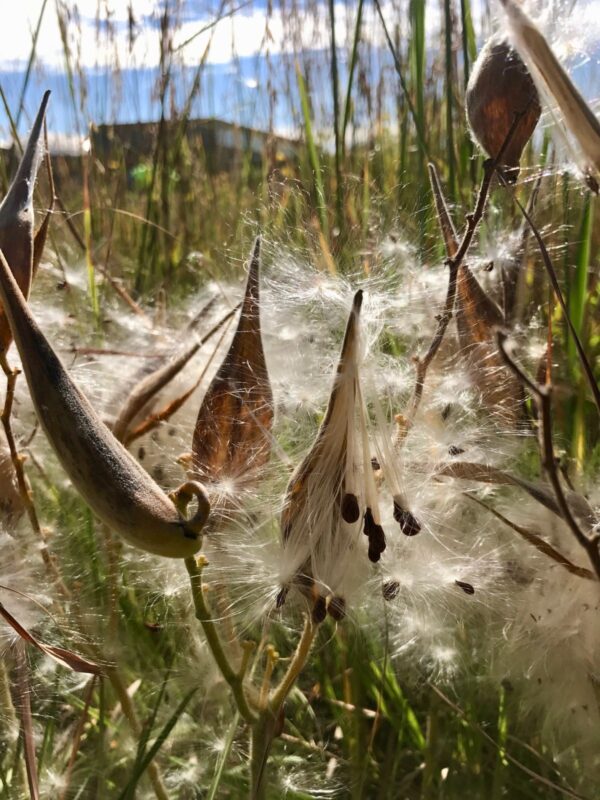
After flowering, slender seed pods develop, releasing silky seeds that spread naturally through the wind.
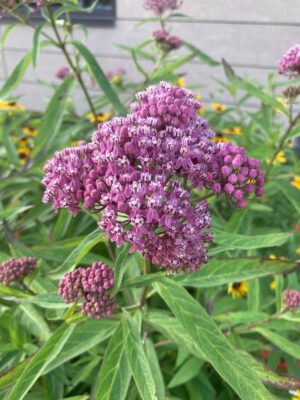
It pairs well with other milkweeds, including Prairie Milkweed (Asclepias sullivantii), Purple Milkweed (Asclepias purpurascens), Whorled Milkweed (Asclepias verticillata), Common Milkweed (Asclepias syriaca), and Swamp Milkweed (Asclepias incarnata). These species vary in moisture needs and form but all support Monarchs.